Your tech stack should be the connective tissue between creative outreach and technical precision. At Impression, we’ve built an ecosystem where industry-leading platforms and our own proprietary technology, like Velocity, work in tandem to turn qualitative coverage into quantitative growth.
In this blog, we’re looking under the hood of our current toolkit. We’ll evaluate how each platform facilitates the crucial SEO and Digital PR synergy. Whether you’re an in-house lead looking to evolve your internal workflow or a peer benchmarking your own stack, this is how we connect the dots between a press release and a sustainable organic ranking.
SISTRIX
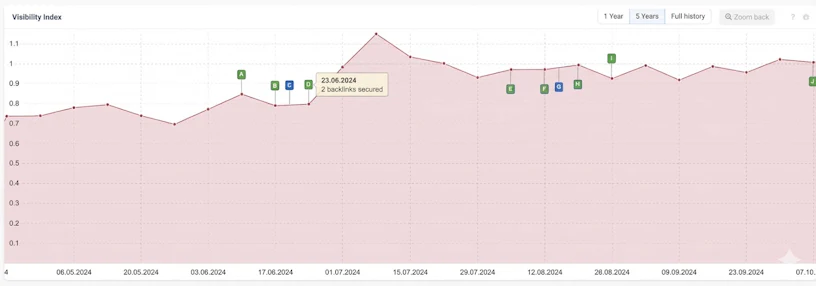
SISTRIX acts as a common data layer that bridges the gap between Digital PR and SEO. It allows both teams to align their strategies by providing a shared, objective metric, ‘the Visibility Index’, to measure the tangible impact of PR campaigns on a website’s overall search presence.
| Pros | Cons |
|---|---|
| Visibility Index Correlation: Its greatest strength is the ability to plot PR campaign “go-live” dates as pins on a visibility graph, showing a direct correlation between a high-authority link windfall and a rise in overall domain visibility (though certain ‘paths’ can be analysed at a more granular level). Competitor Benchmarking: Both teams can track “Share of Search” against competitors, identifying where a competitor’s PR activity is winning them more real estate. | Data Latency: While great for long-term trends, it’s less useful for the “minute-by-minute” tracking of a viral PR story. |
🧠 Best use case
Long-term Impact Reporting. Showing how consistent PR activity has moved the needle on organic visibility over 6–12 months.
Sistrix is my first port of call when it comes to illustrating the relationship between visibility and organic efforts. Being able to draw a relationship between algorithm updates, link building, and their impact on visibility is great for helping us to tell better stories when it comes to reporting.
Ahrefs
Ahrefs is a comprehensive SEO platform renowned for its extensive backlink database, in-depth competitor analysis, and robust tools for keyword research and site audits. It enables users to analyse competitor traffic, search rankings and linking strategies to optimise their own digital presence.
| Pros | Cons |
|---|---|
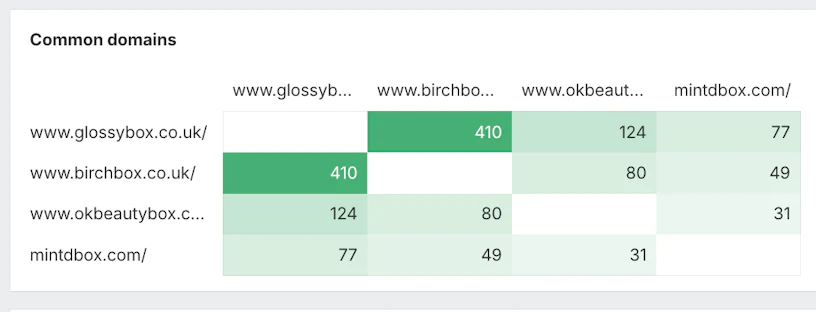
| Link Intersect: Allows both teams to see where competitors are getting links from with high domain authority, meaning SEO can help with production of similar content that’s working well for competitors and digital PR teams can begin outreach to those publications, using SEO content. Content Explorer: A goldmine for digital PR, it helps find trending topics and the specific authors who wrote about them, ensuring pitches are highly targeted. Keyword Explorer: The SEO team can identify high-volume informational keywords and “people also ask” queries that signal what an audience is searching for, while the Digital PR team transforms those data points into newsworthy hooks or data-driven campaigns that journalists actually want to cover. | Credit System: Intensive research (especially for large-scale PR prospecting) can burn through credits quickly, requiring tight coordination on usage. |
🧠 Best use case
Link Reclamation & Prospecting. Identifying lost links for the SEO team to fix, or finding high-DR targets for a new campaign.
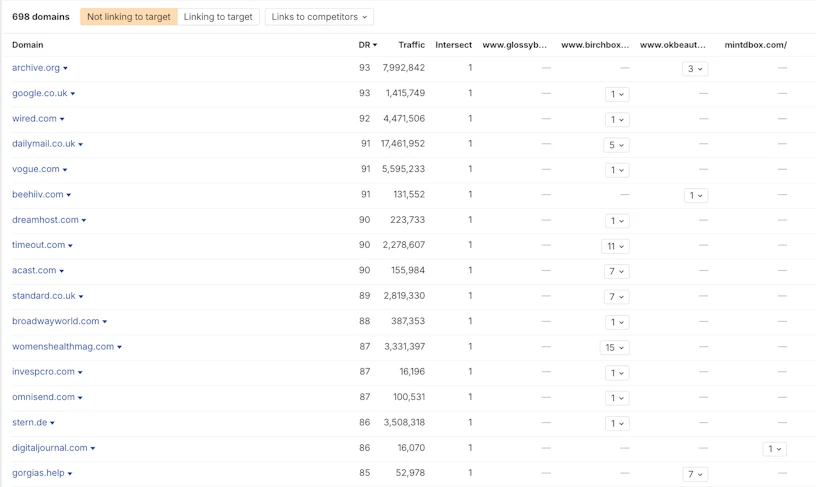
The ‘Best by Links’ report is my go-to for creating a solid collaborative piece of work between the SEO and digital PR team. It tells the DPR team exactly what kind of content actually attracts links in our niche, so we don’t waste time on ‘creative’ ideas that won’t rank. From an SEO/GEO standpoint, doing a link intersect helps both teams to understand where our client may be missing out compared to competitors in terms of brand authority.
I can’t forget to mention that the Keywords Explorer function has been vital in understanding questions and keywords that users are searching for, understanding YoY trends behind them, and informing SEO x digital PR ideation sessions – as we not only get to create content that will be of interest to journalists, but we’re helping to naturally acquire backlinks through relevant and helpful content that we know has a level of demand behind it.
For specific keywords that the SEO and Digital PR teams want to track, SEOMonitor is a good tool with a whole host of features, including YoY Trends, AI Overview presence and other AI tracking capabilities.
Google Search Console & Google Analytics 4
These are our first-party data sources that validate what is actually driving value.
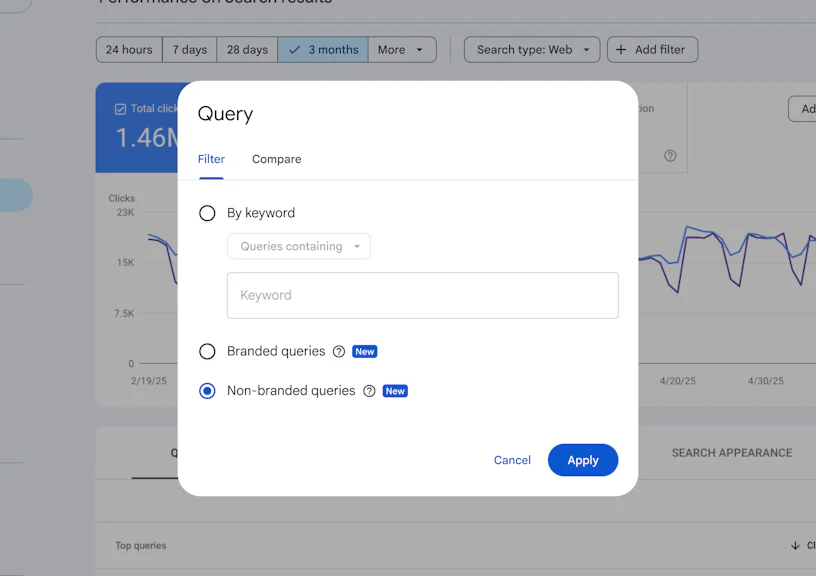
Google Search Console and Google Analytics 4 (GA4) serve as the ultimate “verification and impact” suite, ensuring that the work of the digital PR team translates into measurable value for the SEO team.
While GSC tracks the “Before” (how you appear in search and who is linking to you), GA4 tracks the “After” (what people do once they arrive from those links). Integrating them allows both teams to see the full journey of a backlink.
| Pros | Cons |
|---|---|
| Brand Demand Tracking (GSC): GSC can help to show the spike in branded searches following digital PR activity proving brand awareness even if the journalist didn’t include a link. Referral Traffic Analysis (GA4): GA4 allows us to see exactly which PR placements are actually sending converting traffic, not just vanity traffic. | Data Complexity: GA4’s interface can be a barrier for non-technical PRs; it usually requires the SEO team to build custom dashboards for them. Data cut off: Google Search Console enforces a strict 16-month rolling window for data retention, which acts as a major barrier for longitudinal SEO analysis. While you can bypass this limit by using the GSC API or the BigQuery Bulk Export to warehouse your data externally, relying solely on the native GSC interface means your historical performance has a built-in “expiration date. For users who want a simple, “plug-and-play” experience without managing external databases or third-party storage, this limitation is a significant pain point. |
🧠 Best use case
Attribution & ROI. Proving that a digital PR-built link on a major news site didn’t just pass authority, but also drove £/$ X,000 in sales.
Google Search Console is useful for tracking spikes in branded search queries following a digital PR campaign. This provides evidence of increased brand awareness even in cases where a journalist mentions the brand without including a direct link. Meanwhile, I find that custom graphs in Google Analytics 4 can be a really interesting way to visualise a user journey and show how users who have landed on the site, either from referral or organic, behave on site.
SEOTesting.com
SEOTesting.com serves as the “scientific laboratory” where Digital PR and SEO teams move from guessing to proving the actual ROI of their work.
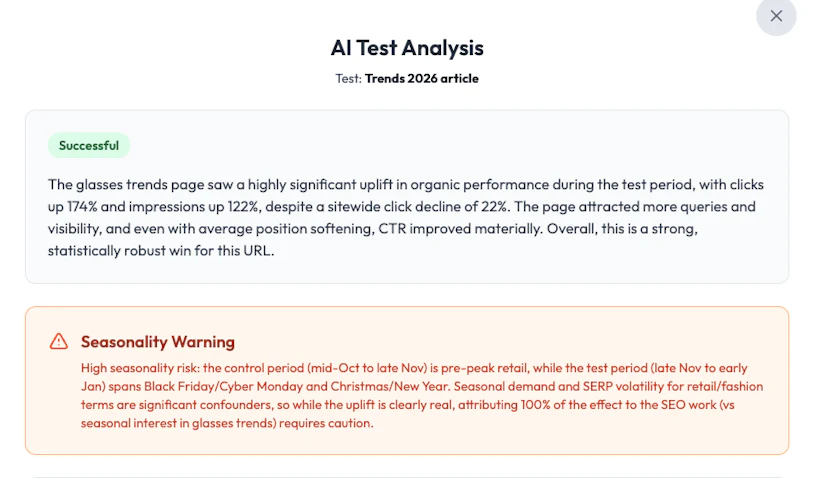
While the digital PR team celebrates the launch of a high-profile media placement, the SEO team uses SEOTesting.com to run tests to measure the precise impact of those new links on organic rankings and click-through rates.
By isolating the period when a major PR win went live, the platform allows both teams to see a clear “before and after” visualisation of how those specific editorial mentions moved the needle for target keywords. This collaboration transforms PR from a “brand awareness” cost centre into a data-backed growth engine, providing the digital PR team with the cold, hard evidence they need to justify their strategy to stakeholders.

| Pros | Cons |
|---|---|
| Time-Based Testing: Used to run a “Split Test” on pages that received heavy PR focus to determine with statistical significance whether the links actually improved rankings for the target keywords. Annotation Automation: It automatically pulls in GSC data and lets teams annotate PR activity, creating a clean “before and after” narrative. | Niche Focus: It’s a specialised tool; it doesn’t replace the broader research capabilities of Ahrefs or Sistrix To get the most out of the tool, you need a basic understanding of SEO testing methodology. Because SEO is influenced by external factors (algorithm updates, seasonality, competitor moves), it can be difficult for beginners to distinguish between a “winning test” and general market noise without a solid grasp of how to set up control groups properly. |
🧠 Best use case
Hypothesis Testing. Proving that SEO and Digital PR spend is directly responsible for a 20% uplift in specific keyword groups.
I find this tool to consistently help me with getting stakeholders to buy into an idea. When we can do a small test and show the impact from that, we are able to roll out the same tactics to a larger group of pages.
Additionally, the ability to annotate these tests can be a great way to ensure that stakeholders can see when backlinks to the pages were also secured, and allows us to ensure that the collaboration between both channels is always made clear.
- The Baseline: These 5 pages currently get 1,000 clicks a month.
- The Intervention: We spent 2 hours refreshing the content and internal links on just these 5 pages.
- The Data: SEOTesting.com shows that 30 days later, these pages now get 1,200 clicks—a 20% lift.
- Buy-In: If we apply this same logic to the other 500 underperforming pages, we can project an additional 20,000 monthly clicks based on the data we just gathered.
InternalLinking.com
While the digital PR team focuses on securing high-impact backlinks from major publications, Internalinking.com allows the SEO team to programmatically distribute that newfound ranking power from those specific landing pages to higher-priority commercial targets.
By automating the mapping and auditing of these internal pathways, it ensures that a single PR “win” serves as a catalyst for site-wide growth, preventing link equity from stagnating and instead driving measurable organic performance to the pages that impact the bottom line.

| Pros | Cons |
|---|---|
| Equity Distribution: It identifies “Power Pages” (those with the most PR-built backlinks) and suggests internal links to “Product Pages” that need a boost. Gap Identification: Helps the SEO team show the digital PR team exactly which content areas need more external “love” to support the site’s architecture. | Speed: This process needs to be done in small batches to ensure that we’re not sending ‘spammy signals’ by changing a load of internal links in one go |
🧠 Best use case
Ensuring internal “link juice” is being distributed efficiently and building authority signals to certain areas of a site.
This tool identifies every instance of a keyword across a site, specifically highlighting where you have missed an opportunity to link to a target page.
This allows you to strengthen the ‘internal web,’ boosting link equity and page importance. It’s a perfect bridge between digital PR and SEO. At Impression, when the digital PR team earns external coverage for a term like ‘Oval Diamond Rings,’ we use this tool to ensure our internal content is supporting that push. We’ll roll these internal links out in phases to ensure the growth looks organic rather than automated.
ResponseSource
ResponseSource acts as a high-speed bridge between Digital PR and SEO by transforming real-time journalist inquiries into high-authority backlink opportunities.
While the digital PR team uses the platform to provide expert commentary and storytelling that secures placements in top-tier publications, the SEO team ensures these responses are directed toward priority landing pages and high-value domains that satisfy Google’s E-E-A-T requirements.
This collaboration turns reactive PR into a strategic link-building engine, where the SEO team’s data-driven targets are met through the digital PR team’s ability to fulfil immediate media needs, resulting in relevant, editorial-standard backlinks that are far more impactful than traditional outreach.
| Pros | Cons |
|---|---|
| Reactive PR (Newsjacking): Allows the digital PR and SEO teams to jump on queries from journalists at top-tier publications immediately. Expert Positioning: SEOs can provide the “technical” answers to journalist queries, which the PR team then packages to earn high-authority citations. | High Competition: Thousands of others see the same queries, so the “win rate” depends entirely on the speed and quality of the response. |
🧠 Best use case
Reactive Link Building. Securing links in the national press by providing expert commentary on trending news.
ResponseSource allows you to pivot quickly on relevant media requests. To manage the high volume of opportunities, I use custom filters to categorise leads into dedicated labels, allowing for targeted searches on specific topics.
From there, I either manage the outreach directly or brief the digital PR team on high-priority leads. Success here is a ‘game of speed.’ By having established thought leaders and a streamlined sign-off process, we can provide immediate expert commentary, significantly increasing our chances of securing top-tier coverage.
This has worked well for me in the past when it comes to ‘gifting guide’ season – for Black Friday, Christmas, Mother’s Day, etc. – there are often many journalists looking at a roundup of gift ideas, so it’s a great time to put forward your products.
Velocity
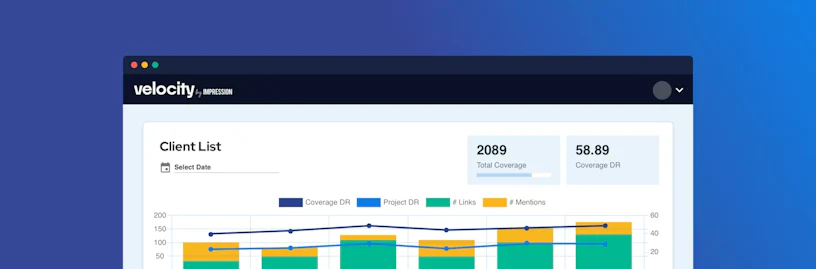
Velocity maximises efficiency and ROI by replacing manual reporting with automated data crawling and objective, AI-driven relevance analysis.
By tracking both linked and unlinked mentions via Ahrefs and Google’s Natural Language AI, it bridges the gap between Digital PR and SEO – ensuring your strategy is quantified, commercially aligned, and optimised for the future of Generative Engine Optimisation (GEO).
🧠 Best use case
Proving Long-Term ROI & Topical Relevance. Quantifying exactly how a piece of coverage aligns with the client’s commercial entities and monitoring its authority “decay” or growth.
“Velocity saves us hours of manual reporting. Instead of just saying ‘we got a link,’ we can show the client exactly how that link is helping Google understand our expertise in a specific niche.”

Otterly
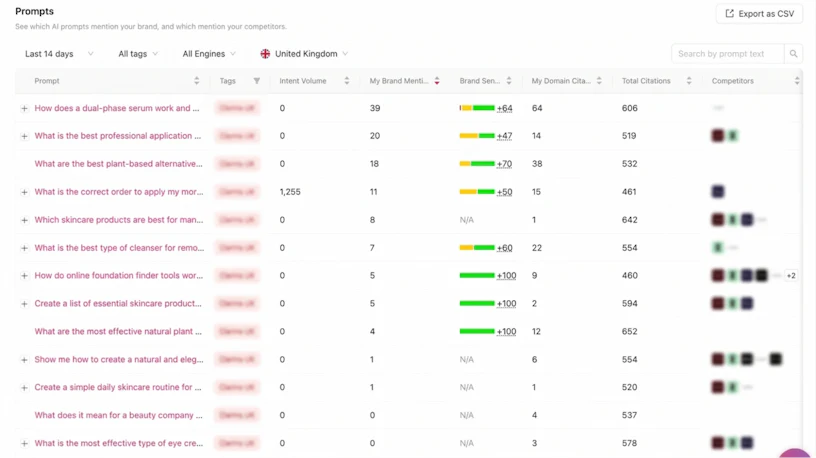
Otterly.AI acts as a specialised lens for Generative Engine Optimisation (GEO), bridging the gap between traditional SEO and the new era of AI-driven answers. It transforms how brands monitor and influence their visibility within platforms like ChatGPT, Perplexity, and Google AI Overviews.
SEO teams use it to track “Share of Voice” and citation gaps, which Digital PR teams can then leverage to identify which publications and expert narratives are being pulled into AI responses, allowing them to reverse-engineer brand authority in the age of LLMs.
| Pros | Cons |
| Multi-Platform Monitoring: Tracks brand mentions and citations across six major platforms simultaneously, including ChatGPT, Perplexity, Gemini, and Microsoft Copilot.GEO Audits: Provides data-driven insights into why certain domains are cited over others, offering a roadmap for optimizing content to satisfy AI retrieval patterns (RAG). | Steep Learning Curve: As this is an AI visibility tool, there are naturally lots of new words and different reports which need to be learnt and understood. Fortunately, the Otterly team offers helpful demos and are on hand for questions. |
🧠 Best use case
Identifying citation gaps for targeted outreach: Mapping out the exact prompts where competitors are recommended by AI but your brand is missing, then using those insights to direct the Digital PR team toward the specific publications the AI is currently prioritising as “truth.”
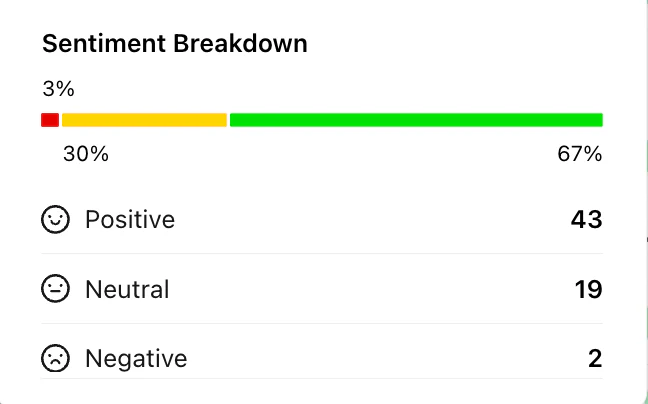
Brand Sentiment acts as a definitive measure of how AI models like Gemini or ChatGPT recommend your brand to users. By quantifying the tone and authority of AI citations, ranging from neutral mixed signals to high-magnitude championing scores, SEO teams can move beyond simple rankings to optimise for authoritative citations and gap-fill categories where competitors are being preferred.
Simultaneously, Digital PR teams can use these insights as a reputation management tool, identifying specific topics where targeted outreach or expert content is needed to influence the AI’s training data and opinion of the brand. Ultimately, this data allows both teams to ensure the brand is actively endorsed as the superior choice, effectively pre-selling the customer before they visit the website.
Final thoughts
The strategic selection and integration of a comprehensive tech stack is the essential connective tissue that unites creative outreach with technical precision for successful SEO and Digital PR collaboration. By operating within this established ecosystem, teams are able to transform qualitative coverage into measurable, quantitative growth
The reviewed tools collectively address every stage of the SEO-digital PR synergy:
- Platforms like SISTRIX bridge the gap with the objective ‘Visibility Index,’ allowing both teams to align their efforts and measure the tangible, long-term impact of PR campaigns on overall search presence.
- Ahrefs serves as a core platform for competitive benchmarking, content prospecting, and keyword-driven ideation, ensuring PR efforts focus on content that is proven to attract high-authority links. ResponseSource complements this by acting as a high-speed bridge, securing relevant, high-authority backlinks by providing immediate expert commentary on trending journalist inquiries.
- First-party data from GSC & GA4 validates the work, allowing for attribution and ROI reporting by tracking spikes in branded searches and identifying exactly which PR placements send converting traffic.
- SEOTesting.com acts as the scientific laboratory, using time-based split tests and annotations to statistically prove the precise impact of new links on keyword rankings, effectively justifying spend.
- Finally, tools like InternalLinking.com and the proprietary Velocity ensure that the newfound ranking power is efficiently distributed across the site and that the long-term ROI and topical relevance of coverage are consistently monitored.
We act as an extension of your in-house marketing team, helping you deliver best-in-class digital campaigns through performance strategy, practical support, and experimentation frameworks.