
Retail Media Agency
Retail Media going beyond best practice
Retail Media is where media performance meets trading reality. Price, promotions, availability, reviews, product content, and catalogue structure all shape results, often more than the ads themselves.
Impression turns retail and marketplace signals into action across Amazon, Walmart, Tesco and retailer media networks, then connects those learnings into your wider Paid Media and SEO strategy so growth is joined up, measurable, and repeatable.
The role of retail media
In this fast-evolving digital landscape, Retail Media represents the entire closed-loop digital retail ecosystem: the evolution of the digital shelf.
Winning in this space requires a unified strategy that blends paid media acceleration, organic content optimisation, and real-time operational metrics.
In this ecosystem, the traditional distance between discovery and conversion is collapsed into a single environment. Product data feeds, rich media assets (A+ content, videos, and storefronts), stock availability, pricing, and reviews serve as the media itself.
Success demands an integrated approach where paid campaigns react dynamically to trading realities, such as stock levels and buy-box status, while simultaneously driving the sales velocity required to elevate organic search visibility. Impression manages Retail Media as a holistic, margin-protective growth lever where every operational variable is optimised to drive total profitability.
Our approach to Retail Media
Closing the gap between media performance and trading reality.
Managing Retail Media requires looking at it as a business-wide performance lever tied directly to commercial profitability.
Impression integrates retail-specific technology with creative execution to optimise Total Advertising Cost of Sales (TACoS), ensuring that media investment directly protects client margins.
Our unified framework optimises every variable of the digital retail environment.
Audit & Insights
We evaluate total digital shelf health by analysing product listing quality, historical conversion rates, review sentiment, and organic share of voice to identify true incremental growth opportunities.
Feed & Inventory Strategy
We connect product data feeds directly to live trading data, dynamically routing budget away from low-margin or low-stock SKUs and aggressively promoting high-margin inventory.
Organic & Paid Synergy
Our SEO and Paid Media specialists co-ordinate campaigns to target keywords where organic gains can be locked in via paid acceleration, reducing long-term reliance on paid clicks.
Brand & Content Optimisation
We design high-impact A+ content, engaging video ads, and bespoke brand storefronts optimised to capture immediate conversion—the definitive metric for both paid and organic algorithms.
Transparent Measurement
We provide complete platform transparency with bespoke reporting focused on the metrics that impact commercial growth: organic expansion, paid efficiency, buy-box ownership, and profit margins.
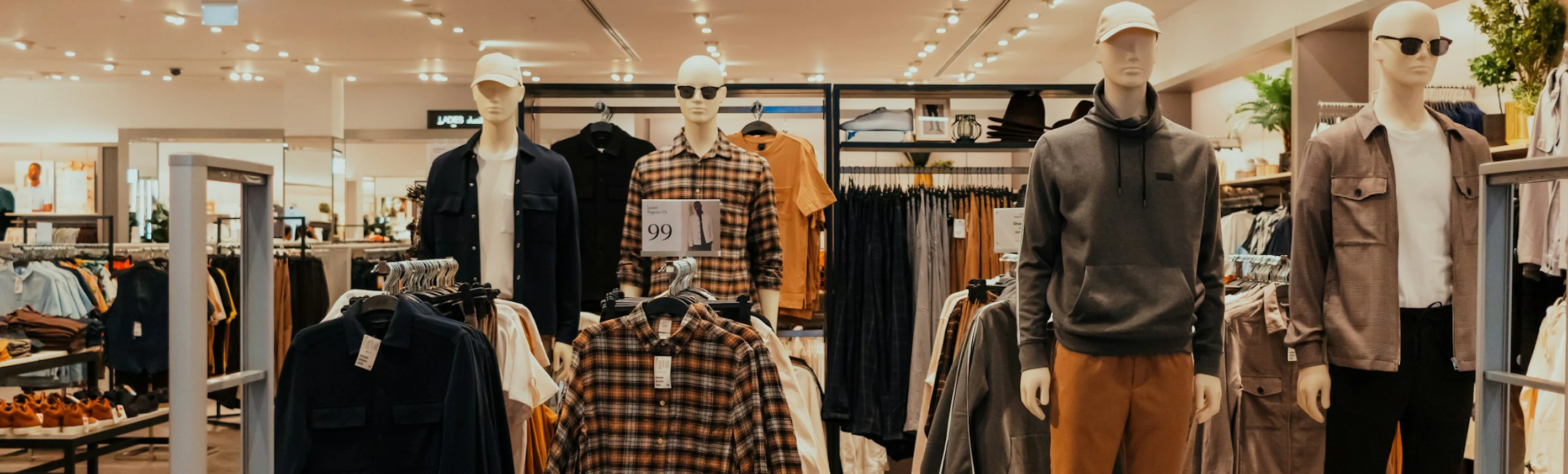
The role of content and creative in Retail Media
Beyond paid media activation and technical excellence, content and creative in retail media function as the primary drivers of conversion and the foundational layer for algorithmic visibility.
Because the creative asset exists at the exact point of purchase, its execution directly dictates campaign profitability.
Retail media creative includes optimised product titles, high-resolution imagery, video carousels, and enhanced text environments such as A+ content or bespoke brand storefronts. This content serves two critical functions within the digital retail environment.
- Algorithmic Conversion Optimisation: Retail search algorithms prioritise products with high conversion rates. Compelling and accurate creative directly increases the likelihood of a purchase, signalling product relevance to the marketplace algorithm and subsequently lifting organic search placement.
- Semantic Readiness for AI Search: Generative AI shopping assistants rely on the text and data housed within product listings to synthesise recommendations. Comprehensive product descriptions, clear feature bullet points, and answered customer queries ensure that AI models can accurately identify, evaluate, and recommend a brand’s inventory.
Incrementality Testing in Retail Media
Incrementality testing isolates the exact volume of sales generated directly by advertising investment that would not have occurred organically.
In high-intent digital retail environments, standard platform metrics like Return on Ad Spend (ROAS) can obscure the reality of performance, with the risk of paid ads capturing sales from consumers who were already intent on purchasing the product via organic exposure to the digital shelf.
To safeguard commercial margins, Impression deploys rigorous experimentation to validate true business growth. Our approach establishes a clear baseline of organic conversions, ensuring the ad budget is directed exclusively towards generating net-new sales.
Holdout
We execute structured holdout tests by withholding paid ad exposure from a controlled segment of shoppers. Comparing the conversion velocity between the exposed group and the unexposed control group provides an undeniable measurement of advertising lift.
Geo-Testing and Match-Market
We deploy geographic testing frameworks for multi-channel retailers and fragmented marketplace networks. By scaling retail media investment up or down across statistically matched geographic territories, we isolate the direct impact of digital ads on both online marketplace checkouts and physical in-store sales volume.
Incremental ROAS (iROAS)
We shift performance measurement from standard platform ROAS to Incremental ROAS (iROAS). This custom metric measures only the revenue driven on top of your organic baseline, providing the transparency required to reallocate media spend toward the specific SKUs, keyword clusters, and category placements that drive true commercial scale.
Why should you work with a Performance agency to manage your Retail Media
Whilst Retail media operates on distinct principles from traditional search engines and LLMs, these ecosystems interact continuously to shape the modern consumer journey.
Winning on the digital shelf requires an understanding of all of these architectural differences and cross-platform synergies.
Intent and Placement
Traditional search engines capture broad informational, navigational, and exploratory queries. Retail media environments isolate consumers at the absolute point of purchase, capturing pure transactional intent.
Operational Dependencies
Traditional search rankings are built primarily on text indexes, backlinks, and technical site performance. Conversely, retail media visibility is structurally dependent on real-time commercial variables. A drop in stock levels, a change in pricing, or the loss of buy-box status will immediately lower organic retail visibility and automatically pause active advertising campaigns to protect margins.
Cross-Channel Interactions and Synergies
Rather than operating in isolation, these search environments actively fuel one another. Managing them with a unified approach maximises overall digital performance.
Retail Media x Traditional Search
Traditional search engines act as high-funnel capture mechanisms, routing consumers directly to specific retailer landing pages and marketplace ASINs. Once the consumer arrives within the retail network, retail media campaigns convert this traffic. The resulting sales velocity and conversion data signal high relevance to the marketplace algorithm. This internal performance data frequently feeds back into traditional search networks, elevating the brand's visibility across external spaces like Google Shopping and organic image carousels.
Retail Media x LLMs
Generative AI shopping assistants and platform-native LLMs shift user behaviour from keyword-matching to conversational synthesis. These models crawl the digital shelf to evaluate thousands of customer reviews, structured product attributes, and answered consumer queries instantly. High performance, detailed organic product descriptions, and consistent conversion volumes within retail media networks directly determine whether an LLM features a brand within its conversational product recommendations.

Retail Media FAQs
Related Retail Media blogs
Read all articlesTalk To An Expert
Find out what we can do for your business
Fill out the form, give us a call or drop us an email. We look forward to hearing from you.