This month, we bring you some exciting developments and updates from the world of search, with a clear focus on the impact of AI search results and how to effectively tailor your content to appear in AIO citations and reduce the impact of zero-click searches.
The search landscape is continuing to evolve into an AI-driven, deeply integrated experience, with platforms prioritising LLMs like Gemini and ChatGPT over traditional search, transforming the way users interact with search engines as a whole. A new zero-click search study has revealed that zero-click searches in the UK have reached an all-time high in June, whereas Germany’s number of zero-click searches, due to stricter EU regulations, has stayed far lower.
Furthermore, data from Advanced Web Ranking’s Q1 2026 Click-Through Rate (CTR) report reflects this divergence across devices, with desktop’s CTR increasing for organic positions whilst mobile suffers losses, damaging the once-reassuring idea that high-ranking keywords guarantee high traffic.
The good news is that, according to a Search Engine Journal overview, this new way of searching can be utilised by brands, but not by content optimisation alone. They suggest that businesses need to prioritise internal alignment regarding brand messaging, content, and outdated pages to present the AI with a firm assurance that the information is reliable and correct, thus increasing the likelihood that the AI will cite it.
We’ll explore these updates in more detail in the article below.
Allow our traffic light system to guide you to the articles that need your attention, so watch out for Red light updates, as they’re significant changes that will require you to take action. In contrast, amber updates may make you think and are worth knowing, but aren’t urgent. And finally, green light updates, which are great for your SEO and site knowledge, but are less significant than others.
Keen to know more about any of these changes and what they mean for your SEO? Get in touch or visit our SEO agency page to find out how we can help.
In this post, we’ll explore:

Research done by a Search Engine Journal overview highlights a pitfall that many SEO experts may be falling into regarding AIO citations. They suggest that a big issue with websites losing visibility in AIOs comes not from the content depth or authority, but from inconsistent information and misaligned brand messaging on their own website that they have failed to consider.
Put simply, if an AI crawls a website and sees inconsistent messaging between product descriptions and content copy, outdated content that is replaced with newer content on a different page, or discrepancies between corporate and international sites, its confidence threshold drops, making it less likely to extract or cite the website as a reliable source. Therefore, to ensure reliable rankings, businesses must align their product, engineering, and marketing teams to maintain consistent data and brand messaging, limiting contradictory messaging or outdated legacy data that will directly harm their visibility.
Google has updated its Google Finance tool to include a functional dashboard, showing your investment portfolio for convenient access and analysis. Within this dashboard is a ‘research tool’ that can deliver deeper analysis of your investments at a convenient and easy-to-read pace.
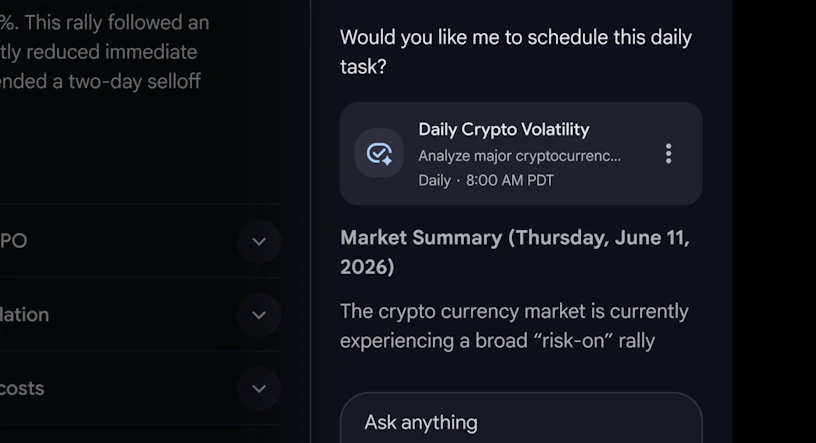
On top of this, they have included a personalised and highly customisable section on market intel so you can keep track of the markets that pertain to you, editing your watchlist however you like. And to make it all more convenient, they have released it as an app too, meaning you can analyse your finances on the move.
A new zero-click search study has revealed that zero-click searches in the UK have reached an all-time high in June, with 69.5% of searches resulting in no clicks to the open web, the highest rate among all analysed nations. Conversely, Germany boasts the lowest zero-click rate (62.1%), seeing 20% more clicks than the UK. This likely comes down to Germany having stricter EU regulatory frameworks on self-preferencing behaviour, whilst the UK suffers from rapid saturation of AI Overviews.
Recent data from the Advanced Web Ranking’s Q1 2026 Click-Through Rate (CTR) report reflects a divergence of performance across devices. While desktop searchers saw notable double-digit CTR boosts for top-ranking organic positions in specific sectors (such as Family & Parenting and Society), mobile query CTRs in top positions suffered consistent losses. This means that even a top mobile ranking does not guarantee traffic anymore, due to AI-integrated features occupying more screen space and replacing organic results.
In the face of this, businesses are encouraged to prioritise their optimisation efforts towards AIO citations alongside traditional high-ranking keywords, since organic traffic alone is becoming less effective.
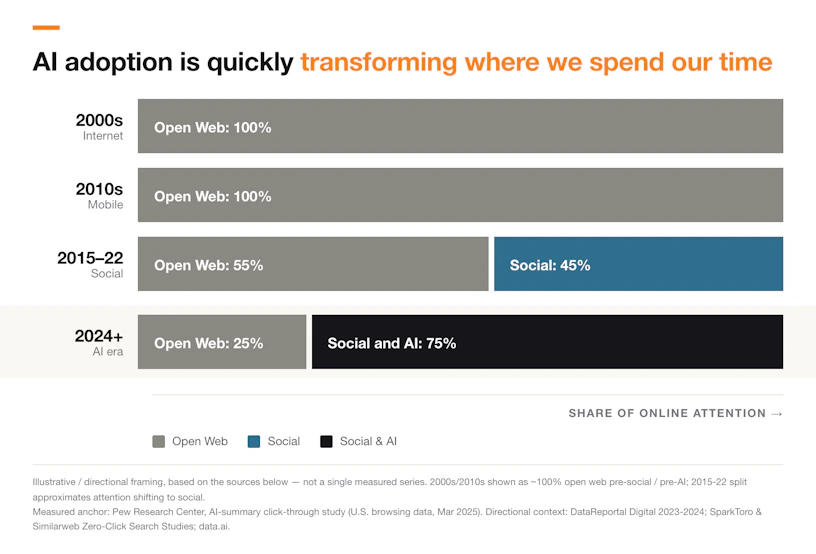
Recent research has also warned of the fundamental shift in our use of search engines, moving away from traditional SEO and becoming an ‘agentic state’. Social and AI now dominate 75% of all time spent on the internet, with only 25% actually spent on the open web. Users are going straight to LLMs for information, neglecting to scroll through website lists, which then decreases the clicks and impressions of all websites.
Not only are users not searching like they used to, but over 50% of all searches are now from AI crawlers to gain information and train themselves. Human searches are now a small and declining element of search engines, being overshadowed by AI crawlers, and the ability to distinguish between a user and an AI crawler is getting harder. Subsequently, SEO agencies are calling for greater transparency of crawlers to better understand how to balance targeting real humans and AIO citations.
Keep an eye on our blog for the latest Google Algorithm updates, or get in touch if you want to discuss your digital solutions, such as SEO, for 2026 and beyond.