The nights are drawing in, and the end of the year is approaching fast. November is often a critical month for marketers as Black Friday and the Christmas rush kick sales into high gear. Alongside seasonal promotions, the paid media landscape is evolving rapidly.
This month’s highlights include…
- Google Ads introduces Waze ads for Performance Max
- Personalised Ads to appear in Meta’s AI Chatbot
- Paid Search feels the impact of Google’s AI Overviews
- Google introduces AI-powered assistants to spot creative and optimisation opportunities
- TV and mobile video ad updates for YouTube advertisers?
- Improved budget planning with Google’s Investment Strategy tool
- New conversion metric and incrementality testing in Google Ads
- Google Ads Editor and Display & Video 360 enhancements
- Performance Max gets direct video uploads
- Google to auto-link YouTube channels and Google Ads accounts
- New Ad Experiences
- Pinterest announces partnership with Epsilon
- Reddit’s Interactive Ads and WooCommerce integration
- Amazon Prime Video -? Location-Based Ads
- Other notable updates
- Meta API, Opportunity Score & social plugins
- Microsoft Advertising mobile app retiring
- Journey-aware and Demand Gen guidance
Google Ads introduces Waze ads for Performance Max
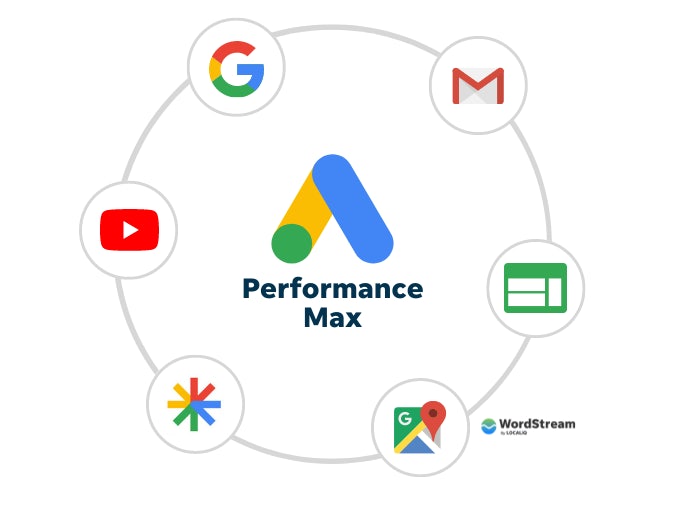
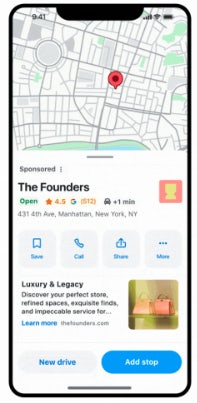
Google will now allow you to create Performance Max campaigns that automatically share ads on popular navigation software, such as Waze. These placements will appear as “promoted places in navigation pins”, and they require no additional setup. Google states these are fully automated, using existing assets to optimise for Store Visits, Store Sales, or Local Actions Directions. Currently only available in the U.S., it aims to expand into multiple markets early in 2026.
What this means for you
This update is extremely positive for retailers and local advertisers. It has filled a crucial gap in which advertisers can reach high-intent on-the-go users right before they make their purchasing decision, and directly links Ad spend and in-store visits, which has historically been a grey area for reporting and analysis. Additional Performance Max reporting updates will provide necessary visibility to the new Waze channel and other placements. While this update is an overall positive, this update advertisers still lack granular control over keywords in Performance Max campaigns, meaning budget shifts to Waze and other placements remain largely outside of manual optimisation.
Personalised Ads to appear in Meta’s AI Chatbot
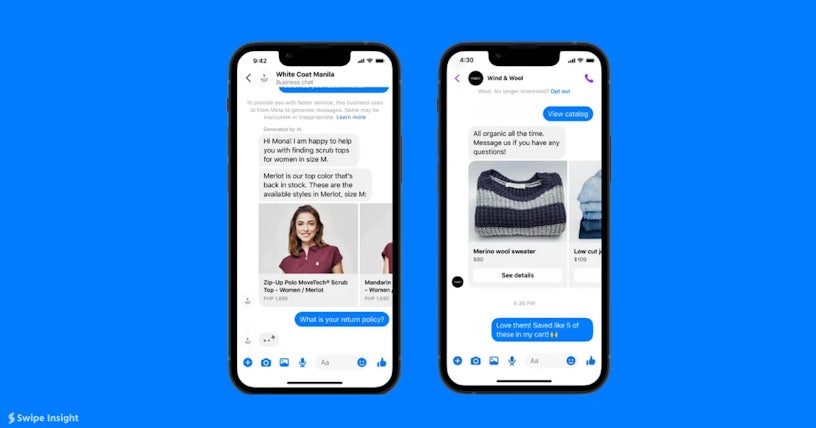
Meta Ads announced that it will be using content from user interactions with its AI chatbot (voice and text) to personalise ad and content recommendations. This change is expected to be rolled out over December 2025, but will exclude the UK, EU and South Korea.
What this means for you
This controversial decision presents a dilemma: Where is the line between performance analysis and user privacy? For advertisers, there is a significant upside; campaigns are likely to become more powerful. By tapping into explicit and conversational signals produced when users are chatting with the bot, advertisers can become much more specific with their targeting accuracy, which could mean an increase in Return on Ad Spend (ROAS). On the contrary, with this move by Meta reignites major privacy concerns on whether the integration of conversational data should be allowed to inform advertising, which explains why the feature is delayed in the UK, EU and South Korea. Regulatory pushback and consumer backlash are already apparent and may cause advertisers to rethink again.
Paid Search feels the impact of Google’s AI Overviews
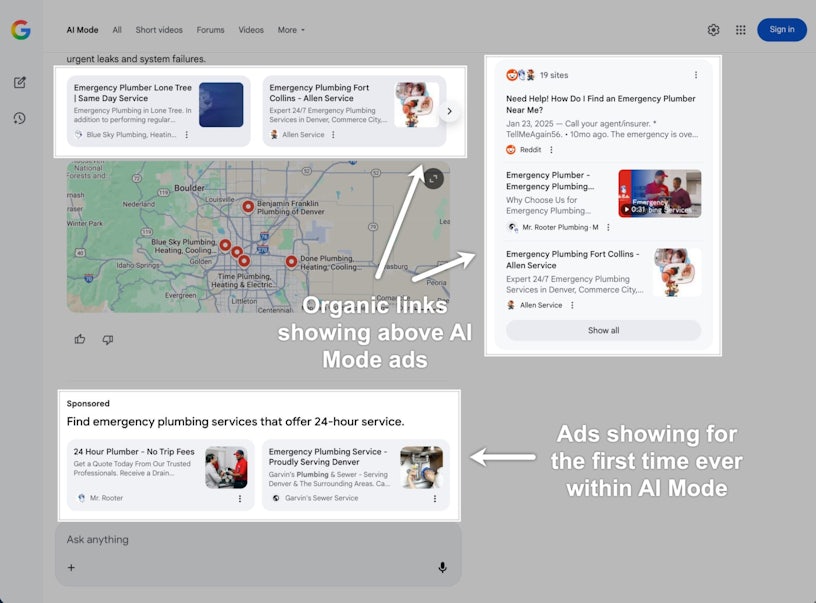
Google’s AI Overviews, that AI-generated answers you see at the top of most search results nowadays, are now being served on high-volume commercial queries, not just long informational searches. Adthena’s analysis of 21 million SERPs across multiple industries shows that when AI Overviews trigger, paid search click-through rates can drop by 8‑12 percentage points. The feature is accelerating the shift from list-based results to single authoritative answers. Generative responses often push ads further down the page, particularly on mobile.Additionally, early testers have also noticed Google showing search ads within its AI Mode interface. This marks a significant new ad surface: ads are blended into the generative answer panel, further shifting attention away from traditional ad units. The company has not released targeting controls or reporting yet, so this remains experimental.
What this means for you
As AI Overviews expand into mid-funnel queries, expect CTR volatility. You may need to reallocate spend from broad informational terms to high-intent commercial terms where standard ads still dominate. Consider using Performance Max or Demand Gen to maintain reach when AI answers suppress text ads. Create content that might be summarised in AI Overviews. Structured data and concise answers could help your site be referenced in generative results, which may indirectly support paid performance. If ads in AI Mode roll out widely, look for new placement reports to see if your creative resonates in a conversational interface compared to a standard SERP.
Google introduces AI-powered assistants to spot creative and optimisation opportunities
Google has introduced Ads Advisor and Analytics Advisor, Gemini‑powered assistants that analyse account data and answer questions in natural language. Ads Advisor can surface optimisation opportunities, generate creatives, identify issues and recommend campaign changes. Analytics Advisor performs root-cause analyses, explains performance fluctuations and suggests actions across Google Analytics 4 properties. Both roll out in English accounts from early December and signal a move toward conversational campaign management.
What this means for you
Instead of sifting through “Change History” logs to understand a sudden performance dip, you can simply ask Ads Advisor, “Why did my conversions drop last week?” It can instantly correlate the drop with specific events, like a budget cap, a policy disapproval, or a shift in auction insights. Similarly, Analytics Advisor in GA4 can answer “Where is the spike in traffic coming from?” without you needing to build a custom exploration report.
While these advisors excel at speed and diagnostics, they lack business context. The AI won’t know that your conversion rate dropped because a popular product went out of stock, or that a competitor launched a massive Black Friday sale early. For strategic decisions involving profit margins, complex multi-touch attribution, or external market factors, always validate the AI’s “opinion” against your own manual analysis.
TV and mobile video ad updates for YouTube advertisers
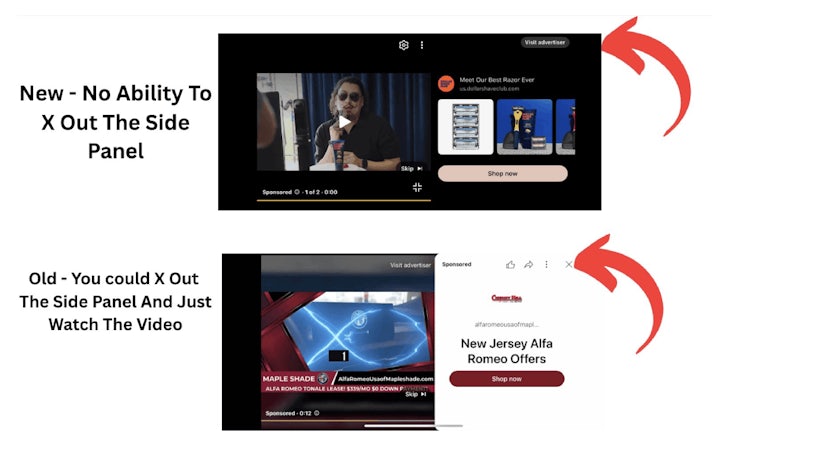
YouTube has removed the close button on the shopping sidebar of mobile video ads, forcing viewers to engage with product tiles, whether they want to or not. Additionally, YouTube announced AI upscaling that enhances SD videos to HD on Connected TV, immersive channel previews and new shopping features such as timed product highlights and QR codes to make TV ads more interactive.
What this means for you
The permanent YouTube mobile sidebar increases accidental clicks (“mis-taps”) on video ads with product feeds. Watch CTR for spikes that may signal low-quality, accidental traffic if paired with a lower Conversion Rate or a higher Bounce Rate. While this forces exposure, it risks user frustration, potentially lowering View Rate and Retention, and hurting Quality Score. This is a platform-level interface update for horizontal video ads with product feeds. The only control lever is removing the product feed, sacrificing shopping functionality. YouTube TV advertisers can use QR codes and timed product highlights to leverage new interactive features.
Improved budget planning with Google’s Investment Strategy tool
If Google Ads detects that a campaign is budget-limited, it now suggests an Investment Strategy tool. This feature uses your historical data to forecast the potential upside of a budget increase. By modelling conversions, revenue or clicks at different spend levels, it estimates how many additional results could be unlocked by raising budgets. This helps marketers quantify the opportunity cost of underspending and justify budget increases with data-backed projections.
New conversion metric and incrementality testing in Google Ads
Google has introduced an Original Conversion Value metric, a reporting column that removes value rules and lifecycle adjustments from conversion value. This lets advertisers see raw revenue separately from post-processing, improving auditing and comparison. Following this, Google has also reduced the minimum spend for incrementality testing from roughly $100k to $5k, alongside improving the models to make results up to 50% more conclusive and added faster reporting.
Google Ads Editor and Display & Video 360 enhancements
The latest version (2.11) of Google Ads Editor added campaign-level negative keywords for Performance Max, search term reporting, scheduled link checks, account-level placement and IP exclusions, editable lead forms and automatic video generation from existing assets.
For Display & Video 360 advertisers, October’s update added API endpoints for creating and retrieving YouTube and Demand Gen assets, support for retrieving Demand Gen ad groups, policy review fields and general availability of Structured Data Files v9.1 and v9.2 for bulk editing.
Performance Max gets direct video uploads
Google is quietly rolling out a new Performance Max feature that lets advertisers upload video files directly in the “Edit assets” panel, without a YouTube channel or Shared Library.
What this means for you: The feature is a useful shortcut for advertisers in a rush or without a YouTube footprint. But best practice hasn’t changed: Upload through your official YouTube brand channel whenever possible to preserve analytics, audience data, and full creative control.
Google to auto-link YouTube channels and Google Ads accounts
Google is rolling out automatic linking between YouTube channels and Google Ads accounts when its systems detect a strong data relationship between the two.
What this means for you: The change streamlines access to YouTube audience data, making it easier for advertisers to target viewers, build data segments, and use video engagement as conversions. But it also raises questions about control, permissions, and whether businesses want Google deciding when assets are connected.
New Ad Experiences
Pinterest announces partnership with Epsilon
Pinterest announced a partnership with Epsilon Clean Room, allowing advertisers to activate privacy-safe audience segments on Pinterest with a 3-day-faster SLA and 5‑15% higher match rates than previous workflows. Marketers can build audiences using over 7,000 attributes and push them directly to Pinterest for activation within 24–48 hours. The integration is live in the US, UK and France.

What this means for you: This integration allows for far sharper targeting than standard interest groups. If you have offline transaction data or a lapsed customer list, use Epsilon’s segments to re-engage them on Pinterest, treating it as a mid-funnel retention channel rather than just a top-funnel discovery engine.
Reddit’s Interactive Ads and WooCommerce integration
Reddit introduced Interactive Ads, a unique unit that lets brands build custom experiences directly in-feed. Templates include countdowns, quizzes, dynamic reveals and trivia. Early testers such as Paramount Pictures and EA created escape games and group challenges. These ads aim to drive deeper engagement and upper-funnel impact, and the format is currently in alpha testing.The platform also rolled out a WooCommerce integration in general availability. SMBs can connect their WooCommerce stores to Reddit Ads with one click, enabling automated pixel and Conversions API deployment, automatic product catalogue sync and quick creation of dynamic product ads. This makes it easier for eCommerce merchants to reach Reddit’s high-intent shopping audience.
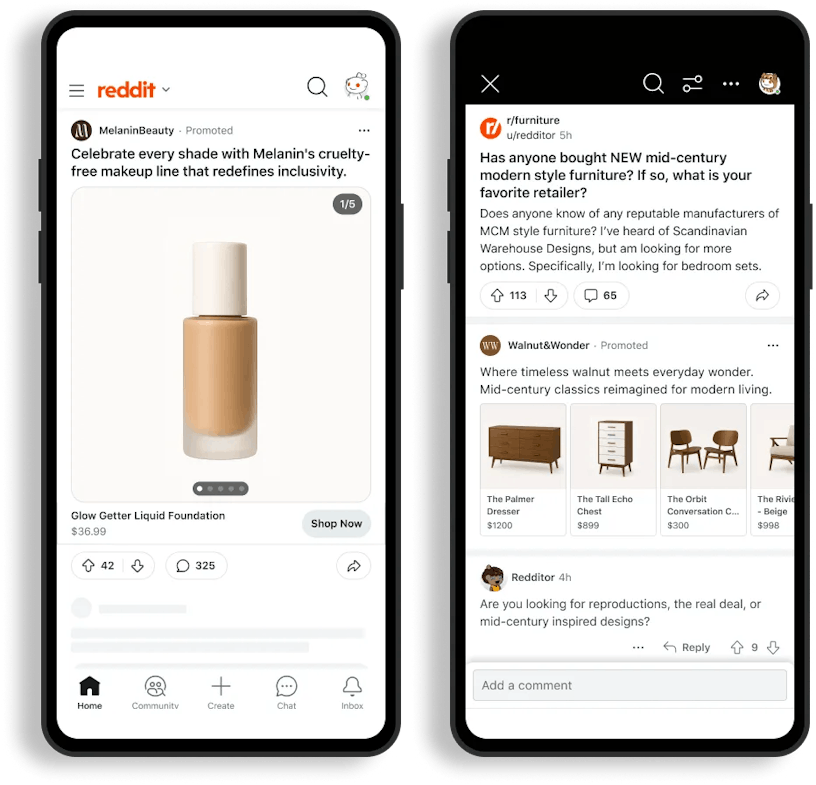
What this means for you: Static social assets won’t cut it here. Interactive Ads demand participation, think polls, games, or “unlockable” content that rewards the user for stopping. If you’re launching a product, use the new “Countdown” template to build hype rather than just announcing availability. WooCommerce merchants should consider the new integration for easy catalogue sync and dynamic ads on Reddit.
Amazon Prime Video – Location-Based Ads
Announced at Amazon Unboxed 2025, Amazon DSP now allows advertisers to run location-based interactive video ads on Prime Video. This feature enables national brands to dynamically insert local details, such as the nearest dealership location, local pricing, or specific offers, into a single video asset shown to viewers based on their geography.

What this means for you
This feature bridges the gap between national reach and local action. If you have physical retail locations, use this to dynamically serve “nearest store” details to Prime Video viewers, making broad awareness campaigns drive specific local foot traffic without needing thousands of unique video files.
Other notable updates
Meta API, Opportunity Score & social plugins
Meta added a Device Platform option in Value Rules and introduced an Opportunity Score in its Marketing API that ranks over 40 recommendations based on predicted performance impact (e.g., estimated conversion lift), providing direct deep links to Ads Manager for quick action. Additionally, Meta enhanced its Generative Ads Recommendation Model (GEM) to improve targeting and announced the discontinuation of Facebook Like and Share buttons for external sites. If your site still uses these plugins, plan to remove them before February 2026. Use the new API features to identify high-impact recommendations and adjust bids by device where appropriate.
Microsoft Advertising mobile app retiring
Microsoft will retire its Advertising mobile app in January 2026, pushing users to manage campaigns through the web interface.
Journey-aware and Demand Gen guidance
Google published a Demand Gen playbook emphasising creative variety, audience segmentation and patience when evaluating these campaigns; they nurture interest over time rather than driving immediate conversions. Journey-Aware Bidding builds on this by using signals across the funnel to adjust bids.
Look out for our December edition of “What’s New in Paid Media” for a monthly round-up of industry updates to inspire your PPC, Paid Social, and Programmatic strategy. If you want to talk about your business’s aspirations, get in touch!