Spring is here, and Q1 is in full swing, so there’s plenty to catch up on in the world of Paid Media.
- ChatGPT Ads Are Officially Here
- What this means for you
- Reddit’s AI-Powered Shopping Carousels in Search
- What this means for you
- Google Launches No-Code Meridian Scenario Planner
- What this means for you
- Microsoft Ads Multi-Image Shopping Carousel
- What this means for you
- Meta integrates Manus AI into Ads Manager
- What this means for you
- Google’s Lookalike Audiences Now Contain AI Signals
- What this means for you
- Other Minor Updates:
- TikTok Launches AI Ad Formats For Entertainment
- Perplexity Pulls The Plug On Ads
- Google Rolls Out Nano Banana 2
ChatGPT Ads Are Officially Here
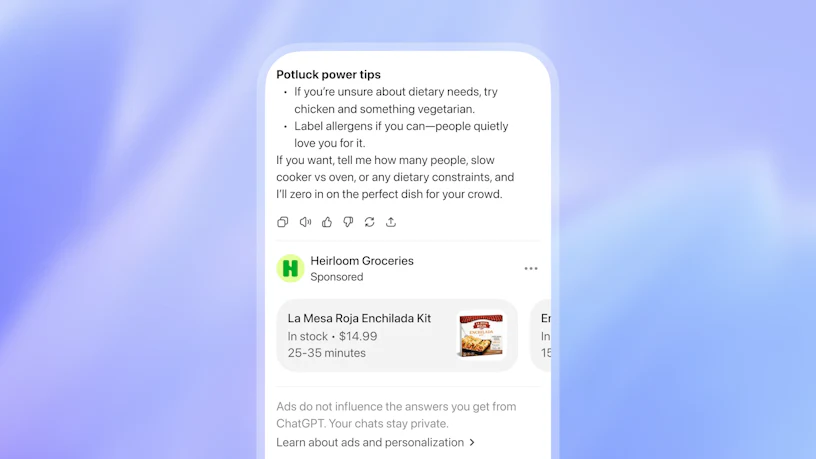
ChatGPT has started showing ads to free-tier users in the US. OpenAI initially called this a cautious rollout, but ads are hitting on the very first prompt for commercial queries, rather than appearing after a few exchanges, like most people assumed. The privacy guardrails are strict: no chat histories or personal data are shared with advertisers, and users can opt out of personalisation entirely. Even so, major brands are already scrapping for position on high-intent terms like “best” and “new.”
What this means for you
Think bottom-of-funnel search, not top-of-funnel awareness, because personal data is off the table, so contextual relevance is all you have to work with. Start carving out a test budget before this reaches the UK. ChatGPT won’t conjure new buyers from thin air, but it will pull high-intent searchers away from Google and Microsoft, meaning you should be ready to move your budgets to where the conversation is happening.
Reddit’s AI-Powered Shopping Carousels in Search
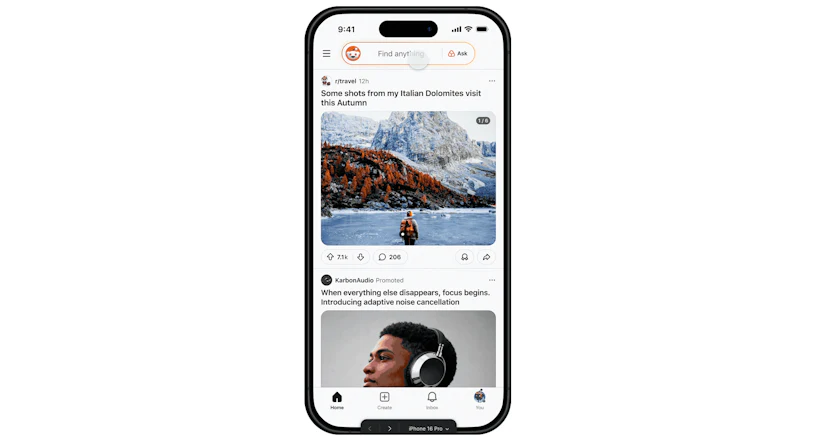
Reddit is testing interactive “Shopping Carousels” directly within its search results. When a user searches for product-related advice, like “best noise-cancelling headphones” or “gift ideas for gamers,” a new AI-powered feature scans relevant community discussions for top-recommended products directly from discussions. Based on these conversations, the system generates carousel ads that include images, real-time pricing, and direct “where-to-buy” links sourced from Reddit’s Shopping and Dynamic Product Ads (DPA) partners. The goal is to shorten the journey from “reading a review” to “making a purchase” without ever leaving the platform.
What this means for you
For advertisers, this is a massive shift in how social proof is monetised. Because these carousels are triggered by community recommendations, your products are essentially being “vouched for” by the subreddits where they are mentioned. However, it’s worth noting that if the AI scans a thread where your product is being criticised, it may potentially affect how or if you show up. To make the most of this pilot, ensure your product feed is active and monitor your brand sentiment across relevant subreddits.
Google Launches No-Code Meridian Scenario Planner
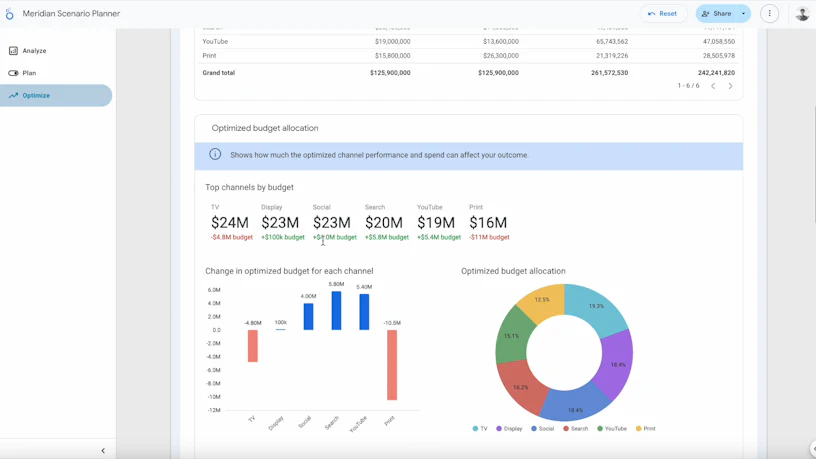
Google has launched Scenario Planner, a no-code interface built on its open-source Marketing Mix Model: Meridian. The goal is straightforward: to allow marketers to test budget allocations and see ROI estimates in real time without needing a data science background. Google cites its own research showing nearly 40% of organisations struggle to turn MMM outputs into actual decisions, and this is clearly aimed at that gap. By setting fixed or flexible budget constraints and adjusting channel spend, the dashboard shows you the impact on effectiveness and marginal ROI straight away.
What this means for you
The analysis that used to sit with a data scientist is now something account managers can run themselves. Simulate different budget splits before committing spend, and use the built-in response curves to see where a channel is nearing saturation. This makes it much easier to spot where your next budget increase will pull its weight and where you’re already pushing into diminishing returns.
Microsoft Ads Multi-Image Shopping Carousel
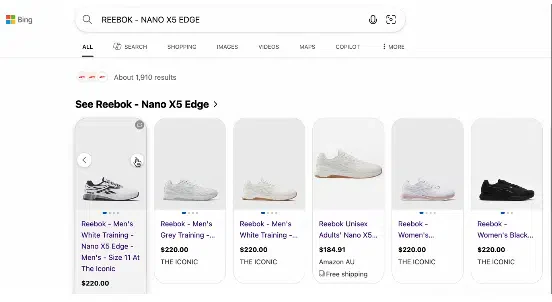
Microsoft Advertising officially introduced multi-image support for Shopping campaigns, allowing advertisers to showcase up to 10 images for a single product. Previously, Bing Shopping ads were limited to one primary image, much like the standard Google Shopping format. Now, users can swipe through a carousel of additional images directly within the ad card on the search results page.
What this means for you
From an advertiser’s perspective, this is a massive opportunity to improve traffic quality and conversion rates. This new feature can make your ads more visually engaging and help potential buyers take a closer look at your products before even leaving the SERP. By letting them see different angles, close-up details, or the product in use before they even click through to your site, you’re giving them more context that effectively helps them move further down the funnel. If you’re interested in using this new feature, you’ll need to update your product feed using the additional_image_link attribute, separating your secondary image URLs with a comma. It’s a simple update that could give your brand a significant visual edge in a competitive SERP.
Meta integrates Manus AI into Ads Manager
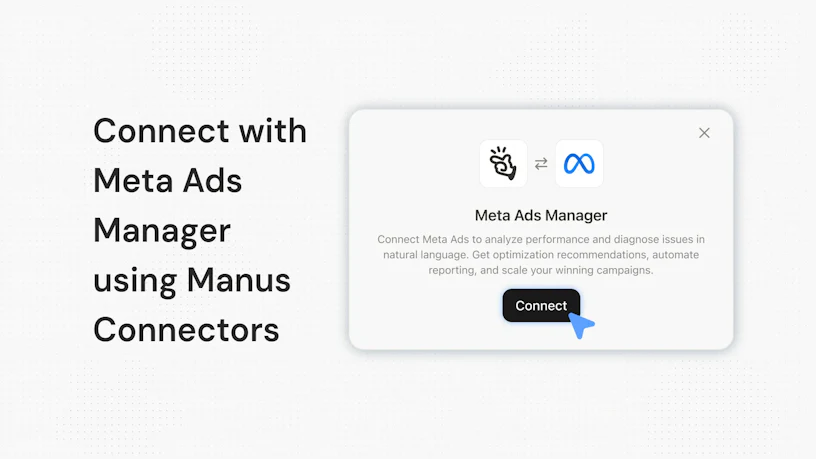
Meta has dropped Manus AI into Ads Manager under the “Tools” menu. It works as an autonomous agent: custom reports, audience research, campaign optimisation, without the manual legwork. Meta is pushing it actively with pop-up prompts appearing mid-session to nudge advertisers towards it. Most observers see this as Meta making the case that its AI investment is paying off in something concrete rather than just capability demos.
What this means for you
The tedious stuff, like pulling reports, building audiences, and visualising data, is now something you can delegate. This is worth testing early, partly for the time savings and partly because Meta will almost certainly push these tools deeper into the buying process. It is better to learn how it behaves now than scramble when it becomes harder to avoid.
Google’s Lookalike Audiences Now Contain AI Signals
Google updated its Lookalike audience segments on Demand Gen campaigns to transition from a strict targeting tool to one driven by AI signals. Before the update, Lookalike segments had tiers (Narrow, Balanced, and Broad) from which advertisers could choose, and Google Ads would strictly remain within those targeting boundaries. Now, Google’s AI can target users outside that specific list if it predicts a user is highly likely to convert.
What this means for you
On one hand, this means less control for advertisers, as your ads no longer stay within a pre-approved audience bubble. On the other hand, the AI could potentially help you find new leads/conversions that would not have been found with stricter boundaries. This could especially benefit niche accounts where small seed lists previously led to “stuck” delivery or high CPAs. While the change has automatically been applied to all accounts, those who are not so keen on giving up control can opt out through a dedicated form.
Other Minor Updates:
TikTok Launches AI Ad Formats For Entertainment
TikTok rolled out two new formats for European entertainment marketers: Streaming Ads and New Title Launch. Streaming Ads serve personalised video carousels or multi-title media cards, while New Title Launch targets users based on genre preferences and price sensitivity. 80% of TikTok users cite that the app has an influence on their viewing choices. If you’re promoting streaming content or live events, there’s a real case for giving these a go.
Perplexity Pulls The Plug On Ads
Perplexity has dropped the sponsored placements it started trialling in 2024, and has no plans to revisit them. The reasoning is simple: ads risk undermining the credibility that an AI answer engine depends on. Paid visibility across Perplexity’s 780 million monthly queries is off the table, and organic citations and digital PR are the only way in now.
Google Rolls Out Nano Banana 2
Google DeepMind has pushed its latest image generation model, Nano Banana 2 (Gemini 3.1 Flash Image), directly into Google Ads. It brings cleaner text rendering, 4K resolution, real-time web grounding for data visuals, and character consistency across up to five subjects in a single workflow. The garbled-text issue that has dogged AI ad creatives for years is largely addressed by generating and iterating production-ready visuals without touching a design tool.
Look out for our April edition of “What’s New in Paid Media” for a monthly round-up of industry updates to inspire your PPC, Paid Social, and Programmatic strategy. If you want to talk about your business’s aspirations, get in touch!