
Whilst for many of us the summer holidays are in full swing, the ad platforms haven’t taken a single day off.
If you’re just heading back to the office after a stint at the beach, here’s what you missed in August.
- Meta AI rolls out campaign analysis and optimisation in Ads Manager
- ChatGPT Ads expands across Europe
- Google brings new AI agent capabilities to Ads and Analytics
- Google Ads enforces hard bidding target system for Smart Bidding
- Google tests Performance Max channel prioritisation controls
- AI Max transition: Dynamic Search Ads (DSAs) and Legacy Search Settings auto-upgrade

Meta AI rolls out campaign analysis and optimisation in Ads Manager
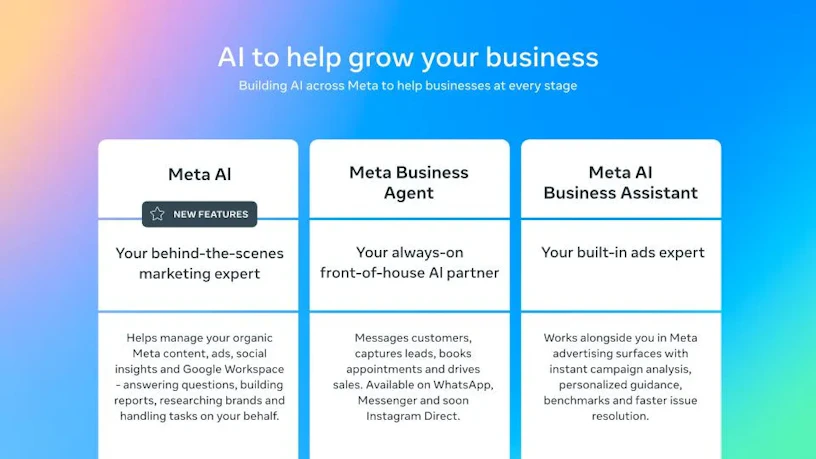
Meta has built its AI assistant directly into Ads Manager, allowing advertisers to analyse performance, get optimisation suggestions, and automate reporting without leaving the platform. It goes beyond simply showing which ads are winning or losing. It can spot patterns in your best-performing creative and explain why something that used to work might have stopped. There are budget insights included, flagging where spend is working the hardest and suggesting where to shift it. Meta is pitching this particularly at small businesses without a data science team behind them.
What this means for you
This means less time spent staring at spreadsheets trying to work out why a creative is fatigued. Meta AI can take a first pass at that diagnosis and tell you whether to scale, refresh, or drop a concept entirely. For smaller teams, it is essentially a junior assistant built into the platform. It won’t replace your judgement, but it takes the tedious part off your plate so you can spend more time on the creative and strategic decisions that actually require a person.
ChatGPT Ads expands across Europe
OpenAI is rolling ChatGPT Ads out to 31 European countries, with Germany, France, Spain, Italy, Sweden, Norway, Denmark, the Netherlands, and Austria among them. The UK is already live, having launched earlier this month alongside Mexico, Brazil, Japan, and South Korea, with self-service access through Ads Manager expected later this summer. Coming close behind the introduction of CPC pricing, geo-exclusions, and conversion bidding, it is clear OpenAI has been building toward exactly this: enough infrastructure to run ads across an entire continent.
What this means for you
If you are advertising in the UK or Europe, this is the moment ChatGPT Ads starts being a channel worth budgeting for. It is already live in the UK, so there is no reason to wait for the rest of the rollout if you want to get started. Once the other markets go live, the new geo-exclusions mean you can keep your spend tightly contained to wherever you actually want to be. If a lack of inventory was the thing holding you back, that excuse is going away. It is absolutely worth setting aside a test budget to see how this performs against what you are already running.

Google brings new AI agent capabilities to Ads and Analytics
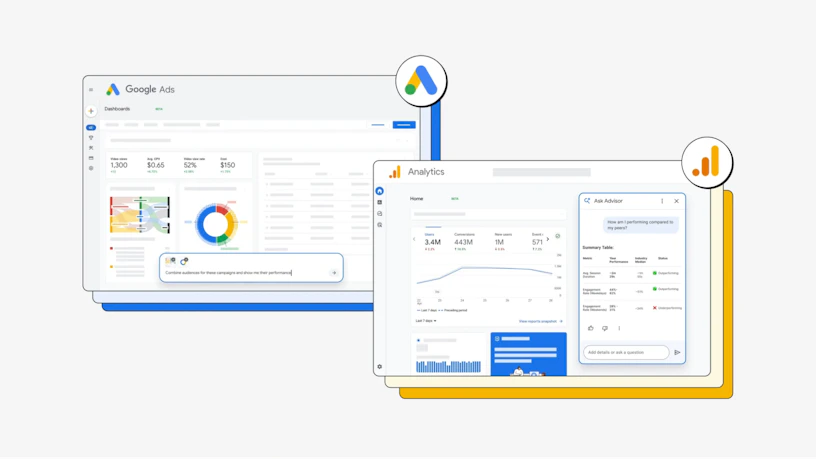
Google is rolling out new AI features across Ads and Analytics, built around its in-product assistant, Ask Advisor. The Analytics homepage now shows AI Overviews: a quick summary of what’s changed since you last logged in, whether that is a seasonal sales peak or a shift in traffic, and you can send any of these straight to Ask Advisor for a closer look. Google Ads is getting a revamped homepage too, featuring personalised insight cards and a prompt box for asking things like how competitors might be eating into your impression share. There are also new prompt-based Dashboards, which build visualisations from raw data and explain the “why” behind them automatically, alongside a benchmarking feature that compares your performance against anonymised competitor averages.
What this means for you
This should save you real time on the reporting grunt work where you are trying to work out why a metric moved before a client asks you the same question. Having Ask Advisor catch those shifts before you do is genuinely useful, provided the insights hold up under scrutiny (early AI summaries from any platform are always worth a sanity check before they go in front of a client). If these tools show up in your account, it is absolutely worth using them. This is clearly the direction Google wants reporting to go.
Google Ads enforces hard bidding target system for Smart Bidding
Google Ads has officially changed how its Smart Bidding algorithm handles Target CPA and Target ROAS. In the past, the system treated these targets more like flexible guidelines. It would happily push for more conversions at a cheaper unit cost if your total budget was tight. But as of mid-August, the algorithm has shifted. It now aggressively throttles auction reach to hit the exact target CPA or ROAS floor you’ve set. That means old tricks, like inflating your targets just to snag extra impressions, won’t work anymore.
What this means for you
Running a tight budget with padded targets? Expect your impression share and conversion numbers to take a sharp hit. The engine just won’t “stretch” your budget across cheaper, lower-intent auctions to meet your volume goals anymore. To keep performance steady, audit your target floors right away. Set your Target CPA and Target ROAS to match your actual historical margins, and make sure your daily budgets are flexible enough for the algorithm to bid competitively without hitting artificial ceilings.
Google tests Performance Max channel prioritisation controls
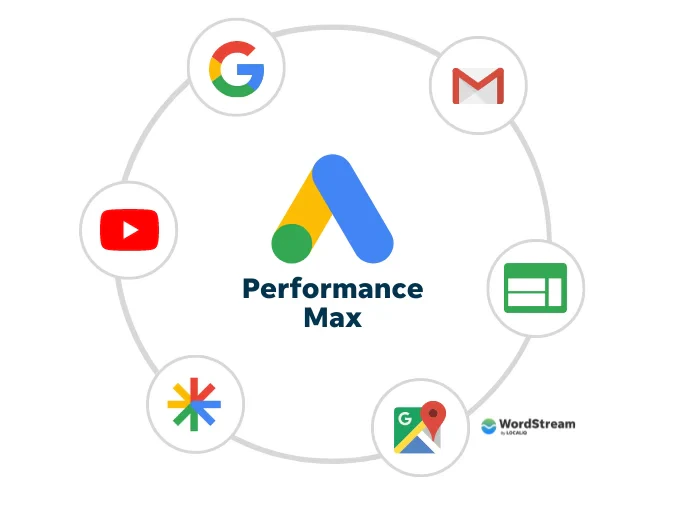
Google is currently testing a new “Channels” control inside Performance Max (PMax), which lets you apply positive or negative bid adjustments to specific inventory sources like Search, YouTube, Display, Discover, Maps, and Gmail. Rather than forcing you into rigid budget split setups, positive adjustments tell the algorithm it’s okay to accept a higher target CPA on a given channel, while negative adjustments tighten the reins. Instead of playing with messy workarounds like stripping out asset groups or carving up listing feeds, you can finally just tell the system directly where you want your budget to go.
What this means for you
While it’s great to finally get hands-on control over where PMax spends your money, this feature can be a double-edged sword if your event reporting isn’t completely clean. If PMax is already leaning heavily into Display or Maps because it’s chasing cheap form fills or soft leads, boosting those channels will only speed up how fast you waste budget. Before you touch these channel adjustments, double-check that your tracking clearly separates actual sales or CRM-qualified leads from low-intent actions. Set a clean 28-day baseline, and evaluate your channel performance based on real bottom-line revenue rather than surface-level CPA.
AI Max transition: Dynamic Search Ads (DSAs) and Legacy Search Settings auto-upgrade
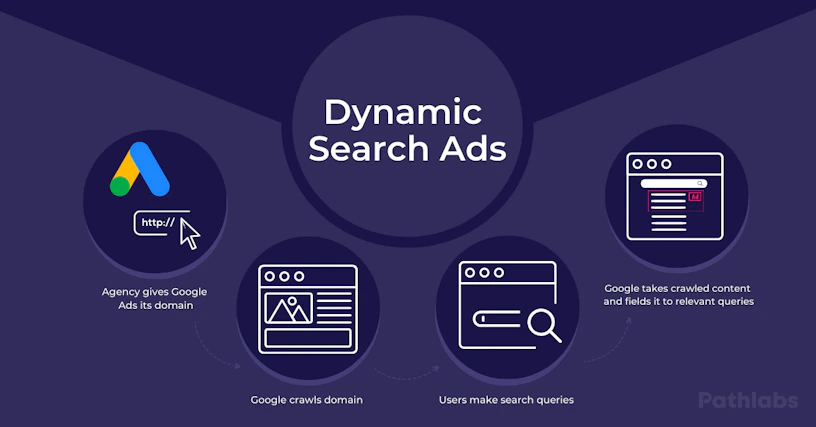
Google has officially mapped out the next stage of its AI Max rollout for Search. Starting in September 2026, any campaigns still running legacy features such as Automatically Created Assets (ACA) or campaign-level broad match settings will automatically convert over to AI Max for Search. On top of that, you will no longer be able to build new Dynamic Search Ads (DSAs) through the UI, Editor, or API starting this September. Any remaining legacy DSA campaigns will be automatically migrated into standard AI Max ad groups by February 2027.
What this means for you
This is a massive shift away from old-school, site-crawled search matching toward Google’s fully automated, multi-signal AI engine. While AI Max can certainly expand your query reach and generate ad copy on the fly, leaving it on complete autopilot is a quick way to burn budget on irrelevant search terms. You’ll want to manage this migration manually before the automated switches flip. Jump into your Search accounts to review active setups, build out comprehensive account-level negative keyword lists, lock down clear brand boundaries, and test out AI Max configurations on your own terms.
Look out for our September edition of “What’s New in Paid Media” for a monthly round-up of industry updates to inspire your PPC, Paid Social, and Programmatic strategy. If you want to talk about your business’s aspirations, get in touch!