Welcome to the latest blog from the Impression Paid Media Team, where we uncover the latest news and trends to help you stay ahead of the curve.
Keep reading to discover:
- Meta Ads officially integrates with Claude
- Google Introduces the Business Agent for Leads
- Meta Ads Quietly Rolls Out Ad-Level Placement Control
- Google Marketing Live 2026: Search Ads & AI Mode
- ?Meta is on track to overtake Google in global ad revenue
- OpenAI confirms conversion-focused ads are coming to ChatGPT
- Looking ahead to June

Meta Ads officially integrates with Claude
From the beginning of May, Meta officially opened its advertising ecosystem to third-party AI assistants by launching Meta Ads AI connectors in open beta. This update fundamentally changes how an account manager interacts with their ad accounts.
By utilising the new Model Context Protocol (MCP), advertisers can now directly link Anthropic’s Claude to their Meta Ads accounts without any complex setup. This will allow Claude to pull real-time performance data, identify any pixel tracking issues, and even build campaigns from scratch, all through simple prompts.
What does this mean for me?
Depending on how you feel about the Glooming integration of AI within all of our everyday lives, this update represents a significant evolution in our daily operational workflows. It effectively moves AI beyond basic help within certain aspects of advertising, transforming it into a proactive, data-informed strategic partner for ad account management.
On the positive side, this is clearly an incredible operational time-saver for anyone managing Facebook and Instagram campaigns. The ability to instantly prompt an AI to ‘show me which of my ad sets have been underperforming within the last week’ completely bypasses static reporting within Meta Ads Manager. This could help paid media marketers to spend less time on tedious data pulling and more time on higher-level strategy.
However, there are incredible risks if this technology is left unchecked. While Claude does have the ability to draft new campaigns and ad sets, strict human oversight will remain absolutely necessary to prevent costly AI mistakes, such as misinterpreting data trends or making sweeping budget changes based on a lack of broader knowledge of the business it is working with. Thankfully, new campaigns built by Claude are created in a ‘paused’ state by default, but advertisers must still remember that AI is made to assist with the execution and not replace the judgement of the digital marketer working alongside it.
Google Introduces the Business Agent for Leads
Announced at Google Marketing Live (GML) in mid-May, Google launched its brand new ‘Business Agent For Leads’ format in open beta. This is a major update and fundamentally shifts how lead generation now functions on the search engine results page, effectively replacing the previous format with a Gemini powered Ai chat agent incorporated directly inside the ad.
Now a potential customer can simply click a chat button and be greeted with a chatbot where they can ask specific questions and receive immediate answers that the AI will pull directly from the advertiser’s own website. Once their questions are answered, the user can then submit a pre-filled lead form without even having to click through to a landing page.

What does this mean for me?
This update represents a big shift for any advertiser who focuses on lead generation. Moving away from the previous static forms and stepping into a future where users can have a full conversation directly on Google’s results page. Working as a way to eliminate low-performing campaigns, as users worked with an ambiguous form, instead turning it into a simple conversation.
This new feature can very easily help to eliminate bad traffic, working as a helpful assistant, working 24/7 by chatting with potential customers before they hand over any details, naturally filtering out people who are just casually browsing. With the new business agent, you don’t need to worry about answers being inaccurate to the business the ads are focused on, as all answers are pulled directly from the company’s website.
However, as always with AI implementation, there is a catch: as the agent draws information directly from a business’ website, the information from within the website needs to be excellent. If certain service or project pages lack detail, the AI won’t have enough information to hold a helpful conversation with the customer. Advertisers will need to make sure sites clearly state important information like pricing, services provided or clear product features if their AI were to succeed.
Meta Ads Quietly Rolls Out Ad-Level Placement Control
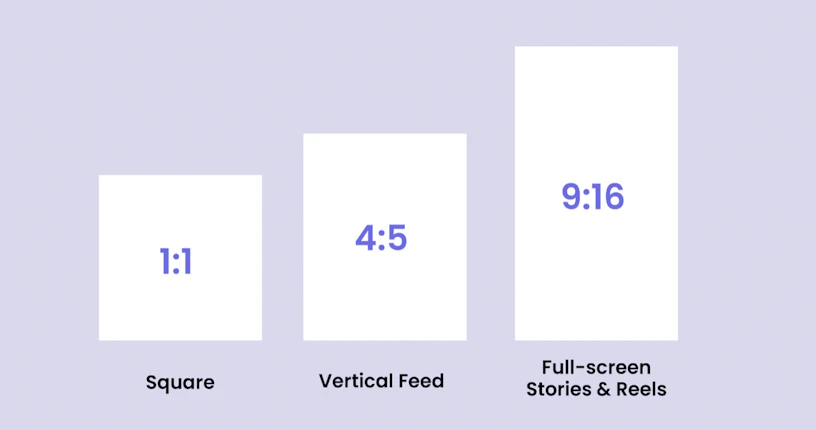
This Month, A small but highly impactful UI update began appearing in Meta Ads Manager: the ability to select placements at the ad level. For years, controlling exactly where your ads appear, such as purely on the Facebook feed or inside Instagram Reels, was strictly an ad set-level decision. Advertisers generally either had to trust the functionality of Advantage+ placements or manually toggle certain placements on and off for the entire ad set. This often then forced account managers to duplicate ad sets entirely, just to ensure a specific creative only ran in its ideal environment. This worked, but created messy, cluttered accounts
This update is a long-awaited structural shift for how we build campaigns and organise our creative assets. It solves one of the most tedious workarounds in Meta Ads Manager, allowing for a much cleaner campaign setup without having to sacrifice control over where your visuals ultimately end up.
What does this mean for me?
The functionality of this is very clear, although simple, it is a massive win for account consolidation. By moving the placement controls down to the ad level, you can now keep your audience targeting unified within a single ad set, while customising the exact placement for each asset. This will effectively eliminate the need for messy single-placement ad-sets cluttering your account. It allows you to run a standard square image to the Feed and a separate vertical video exclusively to Reels, all housed within the same ad set.
Google Marketing Live 2026: Search Ads & AI Mode
Google’s annual marketing flagship event took place in late May, and the overarching theme was clear: Gemini is no longer just a feature inside Google Ads; it’s becoming the operating system. With the expansion of “AI Mode” in traditional search, Google unveiled a new generation of AI-powered conversational ad formats.
The biggest talking points are Conversational Discovery Ads and Highlighted Answers. When a user types a complex, open-ended query into AI Mode, Gemini will now construct highly tailored ad creatives on the fly to answer specific user questions. Furthermore, if AI Mode lists a set of recommendations, relevant brand ads can now be injected directly into that list as a Highlighted Answer. Alongside this, Google expanded its Direct Offers pilot, introducing native checkout integration, allowing users to buy products directly from an AI search result panel.

What this means for you
We are witnessing a monumental structural shift away from keyword-first marketing toward a “goal-in, AI-executes” model. For performance marketers, this means the traditional lever of matching exact-match keywords is losing its monopoly on search volume.
To win in this conversational ecosystem, your focus must shift heavily toward creative and product feed data asset quality. If you are an e-commerce merchant, setting up native checkout protocols will be vital to reducing friction. For lead-generation and B2B marketers, ensuring your landing pages contain structured, easily indexable, and authoritative answers will dictate whether Gemini deems your business worthy of a “Highlighted Answer.” Expect to see volatile CTRs on standard search campaigns as volume shifts into these conversational panels.
Meta is on track to overtake Google in global ad revenue
For the first time in digital advertising history, Google is projected to lose its crown as the world’s largest advertising platform. According to the latest eMarketer forecasts, Meta will reach roughly $243.5 billion in net global ad revenue this year, narrowly edging out Google at $239.5 billion. This places Meta at 26.8% of worldwide digital ad spend versus Google’s 26.4%.
The bigger story is the sheer speed of this shift. Meta’s ad revenue is growing at an estimated 24.1% this year, more than double Google’s projected 11.9%. This acceleration is being heavily fueled by the mature adoption of Advantage+ automation, massive engagement scaling on Reels, and robust AI-driven creative tools that have simplified campaign management for businesses of all sizes.
What this means for you
Paid media channel split strategy will need to be evaluated as paid social is set to overtake paid search as the primary channel in the paid media and E-commerce industry. Advertisers leaning entirely on search and shopping risk completely missing where user attention and platform budgets are accelerating. Meta’s growth is proof that its behavioural, machine-learning-driven targeting model has successfully navigated the post-cookie landscape.
For your 2026 strategy, the gold standard will be a balanced approach: use Google Search to capture high-intent demand at the bottom of the funnel, but aggressively scale your Meta budgets to build the initial demand, familiarity, and desire that trigger those searches in the first place. Relying on a single platform is no longer a viable strategy.
OpenAI confirms conversion-focused ads are coming to ChatGPT
It’s the move the industry has been anticipating for over a year. On May 27th, OpenAI officially confirmed that conversion-focused ads are coming to ChatGPT. As user behaviour continues to fragment across alternative search engines and LLM interfaces, OpenAI is building out a monetisation framework designed explicitly for performance marketers, not just broad awareness banners.
While exact format dashboards are still in early developer testing, the announcement stated that ads will be contextually woven into conversational streams, focusing heavily on driving direct user actions, lead generation, and click-throughs to commercial landing pages.
What this means for you
The search landscape is officially a multi-polar environment. While Google still commands the lion’s share of search intent, ChatGPT’s move into conversion advertising means paid social and paid search budgets will soon have a major new competitor.
For digital strategy, this reinforces the need to diversify your media mix. Keep a close eye on OpenAI’s documentation over the coming weeks for beta access opportunities. When it goes live, early adopters will likely benefit from lower initial CPMs and highly engaged, tech-savvy audiences. Start thinking now about how your attribution models will account for conversational AI touchpoints that happen entirely outside of traditional SERPs.
Looking ahead to June
As we move into June, the ripple effects of Google Marketing Live will start hitting live accounts, and the battle for conversational search real estate will truly begin. We’ll be keeping a close eye on how these automated formats affect standard text campaign efficiencies.
Look out for our June edition of “What’s New in Paid Media” for your next monthly round-up of industry updates to keep your PPC and Paid Social strategies ahead of the curve.
If you want to talk about how these massive AI shifts will impact your business’s acquisition strategy, get in touch with the team at Impression today.