This month, we bring you exciting developments and updates from the world of search, with a clear focus on new AI opt-out controls, algorithm freshness, and aggressive spam crackdowns.
A major shift in AI control and integration is taking place. Google, Microsoft, OpenAI, and Anthropic have united to back a single AI opt-out token, vastly simplifying how web publishers can block AI bots from scraping their content for training data. Additionally, Google continues to refine its AI ecosystem, launching a new ‘Connected Apps’ platform for developers and updating AI Overviews to better integrate inline links that drive direct traffic to publishers.
Vital details have emerged about how Google Discover’s SDF freshness algorithm prunes stale content. Site owners are also facing a wider crackdown on User-Generated Content (UGC) SEO spam, and recent research reveals that Google has been actively ‘poisoning’ search results to disrupt rank trackers, serving fabricated data that may cause temporary, artificial drops in your tracked rankings.
We’ll explore these updates and more in detail in the article below.
Allow our traffic light system to guide you to the articles that need your attention, so watch out for red-light updates, as they’re significant changes that will require you to take action. In contrast, amber updates may make you think and are worth knowing, but aren’t urgent. And finally, green-light updates, which are great for your SEO and site knowledge, but are less significant than others.
Keen to know more about any of these changes and what they mean for your SEO? Get in touch or visit our SEO agency page to find out how we can help.
- AI Updates
- OpenAI, Google, Microsoft, and Anthropic back an AI opt-out Token
- Google introduces Connected Apps platform
- Google's latest AI updates
- Search Engine Updates
- Poisoned Google SERPs affected rank trackers
- Details emerge about Google Discover’s SDF freshness algorithm
- Google signals a wider crackdown on SEO spam

AI Updates
Google, Microsoft, OpenAI, and Anthropic have agreed to back a shared AI opt-out token using the __usage_ai-training instruction in a site’s robots.txt file. This allows web publishers to easily block these major tech companies’ AI bots from scraping their content for training data using a single, unified command, simplifying the opt-out process across the industry.
Anthropic has already begun implementing this token, while OpenAI plans to roll it out in the coming months. Microsoft is targeting a February 2027 implementation, and Google aims to support it later in 2027. Site owners need to note that this token acts as a forward-looking ‘coordination mechanism’ rather than a strict security control, and it does not retroactively remove content that has already been scraped and ingested into existing training sets.
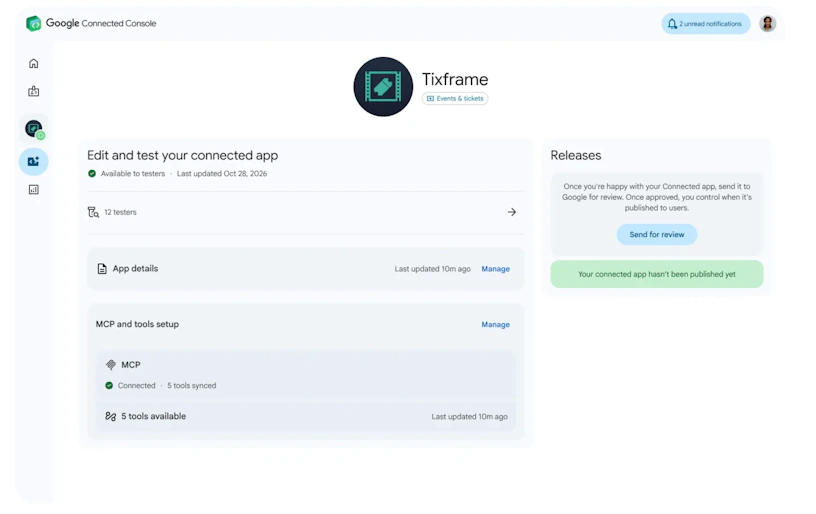
Google has introduced a ‘Connected Apps’ platform, aiming to centralise developer tools for Google Search and Gemini in one place. This update streamlines how developers build applications that connect directly to Google’s ecosystem, enhancing capabilities of Gemini and providing users with more integrated app experiences directly from their search results without leaving the page.

Google announced several core AI updates for October, continuing to refine how users interact with AI in search. These updates focus heavily on making AI Overviews more helpful by better integrating inline links to publisher content and adjusting the presentation of citations to drive more relevant, direct traffic to source websites.
Search Engine Updates
If you’ve noticed your rankings dropping recently, don’t panic just yet. Recent research from Nozzle has identified that Google is actively ‘poisoning’ search engine results pages when they detect scraping activity from rank trackers.
Instead of just blocking the bot, Google serves a completely fabricated SERP with swapped-out rankings. The disruptions began with scraper requests failing on September 13th, and by September 20th, bots were receiving these poisoned pages. While the issue eased slightly in mid-October, it hit its worst level yet on November 2nd, when nearly 68.6% of analysed SERPs were poisoned.
When tracked sites drop out of the top 10 due to this, 45.1% have their usual rankings back within three days, and 89% return to normal within two weeks. Just be aware that your rank tracking tools might be showing you artificially altered data rather than true organic results during these peak periods.
New details have emerged regarding Google Discover’s SDF (Supersession-Decay Filtering) freshness algorithm. This AI-powered system has been actively shaping Discover feeds for the past two years, changing how content qualifies for visibility.
Unlike traditional systems that rely on publication dates or reactive user engagement metrics, SDF acts as a proactive filtering layer that prunes stale content before it reaches the main ranking stage.
It achieves this using two distinct AI filters:
- Supersession: This filter evaluates the relationship between older and newer content to determine if an article has become outdated because fresher, more accurate information has replaced it.
- Relevance Decay: Even if no newer information has been published, this filter predicts when a piece of content will naturally lose its usefulness to readers over time.
If an article is flagged by either filter, it becomes ineligible to rank in Google Discover. Over its two-year deployment, this dual-filter system has reduced user complaints about stale content by 54.9% while saving Google computing costs.
This development emphasises the importance of updating articles as their relevance decays, balancing short-term news with evergreen pieces, and factoring content freshness into internal linking strategies.

Google signalled a much wider crackdown on User-Generated Content (UGC) SEO spam. Moving forward, Google is taking stricter actions against platforms that allow users to create low-quality, spammy pages or subdirectories. Site owners using UGC features must heavily moderate their platforms or risk being penalised, as Google aims to aggressively remove this manipulative third-party content from its search results.
Keep an eye on our blog for the latest Google Algorithm updates, or get in touch if you want to discuss your digital solutions, such as SEO, for 2026 and beyond.