This month, we bring you some exciting developments and updates from the world of search, with a clear focus on changes made to Google’s AI Overviews, the personalisation of search, and the way AIOs are affecting zero-click behaviour.
The start of a large shift, and a slightly controversial one, is happening in the world of search: Google has started pushing users into its AI mode by taking away the ‘show more’ button and having the AIO box expand automatically, pushing organic links further down the page. This has left publishers frustrated, as their links are once again being taken over by AIOs, leading to fewer organic clicks. Google have also included link carousels in their AIO and AI search modes, making AI search a ‘one-stop shop’ for users and driving them away from organic links.
In terms of personalisation, Google has released their ‘preferred sources’ filter that allows users to save certain websites so that AIOs will pull from them first before others. Controversy has already broken out about how this may segregate data and create informational bias, but the results remain to be seen. And finally, recent research shows useful insights into the trend of zero-click data and how this is changing the search landscape.
We’ll explore these updates and more in detail in the article below.
Allow our traffic light system to guide you to the articles that need your attention, so watch out for red-light updates, as they’re significant changes that will require you to take action. In contrast, amber updates may make you think and are worth knowing, but aren’t urgent. And finally, green-light updates, which are great for your SEO and site knowledge, but are less significant than others.
Keen to know more about any of these changes and what they mean for your SEO? Get in touch or visit our SEO agency page to find out how we can help.
In this post, we’ll explore:

In August, Google Search has confirmed it’s pushing people into AI mode by default. Before, users were shown an AIO summary with a “show more” button beneath it and were free to browse links as shown below.
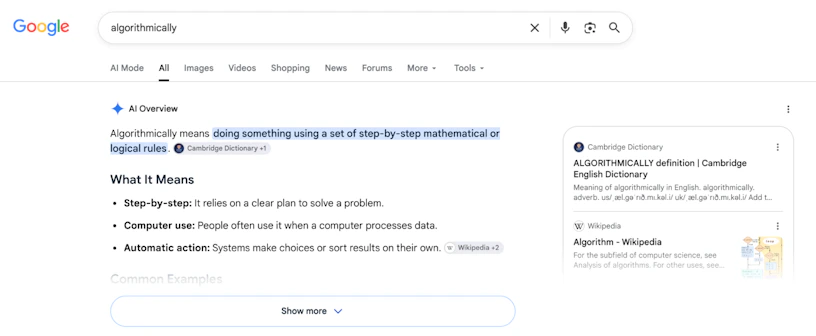
Now, Google has taken the ‘show more’ button out of the equation, automatically opening up the AIO to full size and pushing the default search results further down the page. What’s more, they’ve added an ‘ask me anything’ text box at the bottom, encouraging users to interact with AI mode instead of clicking organic links.
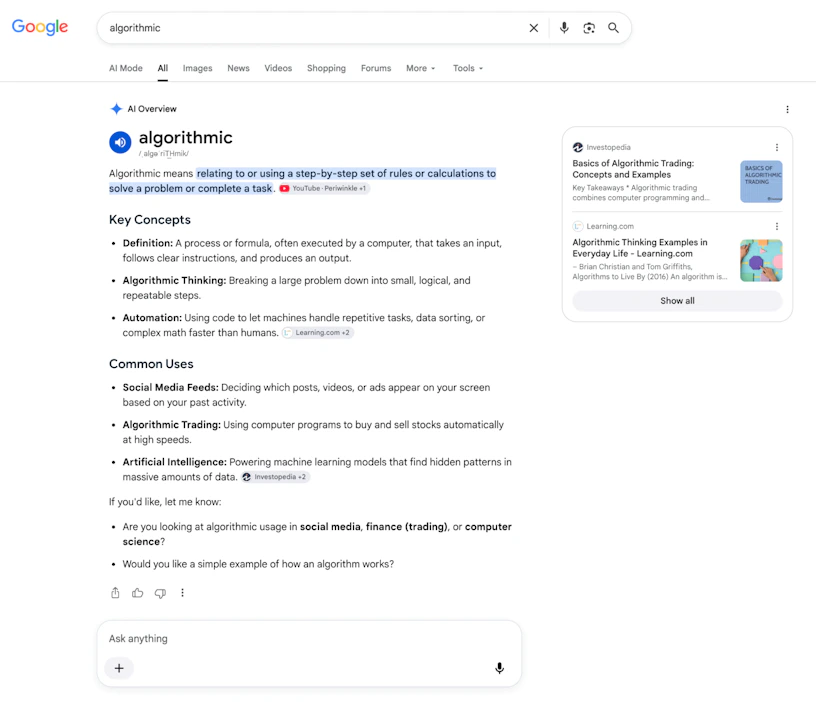
Publishers are already giving criticism, arguing that this takes even more clicks away from creators and disrupts traditional SEO. However, Google has stated that this only takes place when it is deemed useful for users, and the AIO shrinks upon scrolling down so that users can browse links as usual. Regardless, this expansion of the AIO is likely going to result in a higher frequency of zero-click searches, which many publishers are not happy about.

Google has also included ‘link carousels’ into AIOs and AI search mode, making it easier for users to reach related articles and videos without having to explore the page or scroll down.
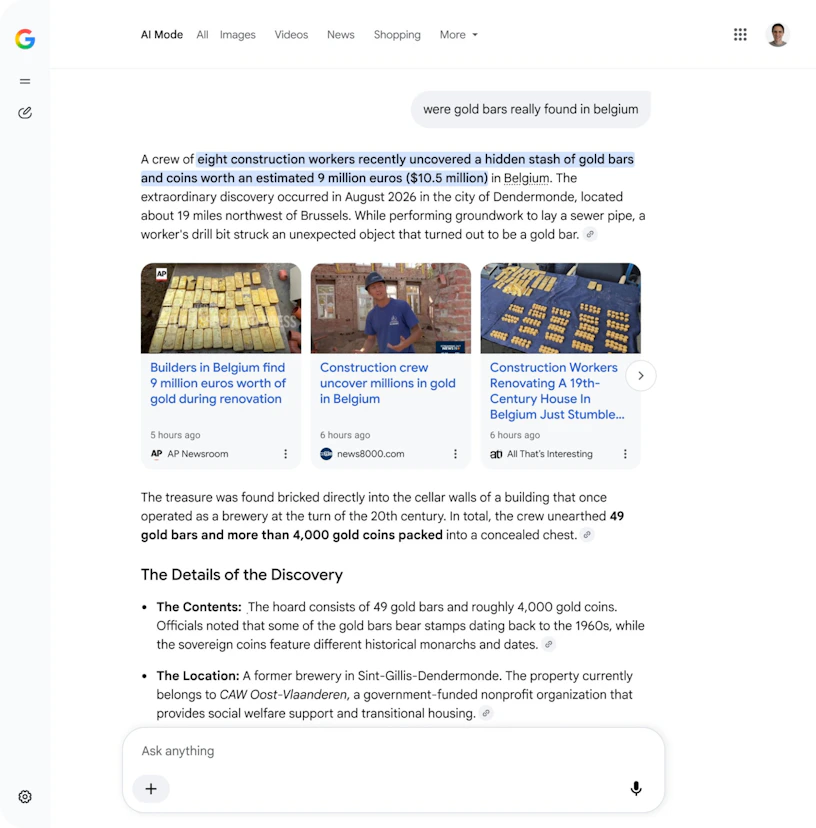
Whilst this may be convenient for users, publishers are similarly upset by the consolidation and expansion of AIOs, which seem to be taking over traditional organic links, leading to fewer clicks and impressions for website owners.
Google has also introduced a ‘preferred sources’ option in their search, which allows users to save preferred websites so that the AIO will take information from them before any other. Whilst Google ensures that this acts as a ‘favourite’ filter and allows users to customise their experience, others have already begun to worry about what this means for the future of information.
If searches are being filtered and information separated, there is worry this could lead to informational bias, rather than providing all the information for objectivity. Of course, this feature is optional, but the effects of this are still to be seen.
What 13 billion Google searches reveal about zero-click behaviour

Interesting research around zero-click behaviour shows that around 46.96% of searches end without a click due to AIOs. Similarly, Google now answers such a high frequency of informational queries that it absorbs nearly 30% of Wikipedia’s traffic, whilst sites like Reddit are effectively left untouched.
It has also been shown that ChatGPT is pulling clicks away from organic searches but leaving paid advertisements relatively untouched, meaning paid media is becoming a more important part of the marketing process. Although users are still 25 times more likely to click on an organic search result than a paid ad, the reality is that organic clicks are slowly decreasing whilst paid clicks are steady.
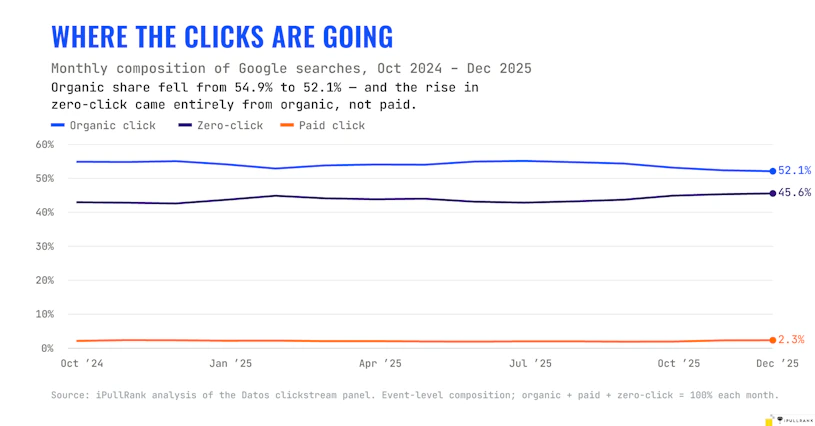
It also found that there is a generational divide between those who engage with LLMs like ChatGPT and those who prefer organic links. It was found that 52.3% of Gen-Z users’ searches end with zero-clicks, whereas that number drops to 42.7% for ages 55-64, showing that it’s the younger generation that is using AI more.
Keep an eye on our blog for the latest Google Algorithm updates, or get in touch if you want to discuss your digital solutions, such as SEO, for 2026 and beyond.