This month, we bring you some exciting developments and updates from the world of search, including new industry news and studies.
Google has woven Gemini 3, its latest large language model, directly into the search experience. When users ask follow-up questions in AI overviews, they are sent instantly into AI mode, instead of staying in the static overview page as before. Furthermore, Google has introduced AI-powered features to Google Trends, allowing users to dive deeper into search trend data using AI insights.
Yet, despite the sensational claims around the ‘death of search’, the latest data from Graphite shows quite the contrary. While AI overviews do eat into click-through rates, organic search remains remarkably steady. In addition, Microsoft Advertising just published a guide to GEO and AEO, emphasising the success in search engine now is all about supplementing traditional SEO with the new norms – learning how to make sure AI systems don’t just find your brand, but actually recommend it.
We’ll explore these updates and more in detail in the article below.
Allow our traffic light system to guide you to the articles that need your attention, so watch out for Red light updates as they’re major changes that will need you to take action, whereas amber updates may make you think and are definitely worth knowing, but aren’t urgent. And finally, green light updates, which are great for your SEO and site knowledge, but are less significant than others.
Keen to know more about any of these changes and what they mean for your SEO? Get in touch or visit our SEO agency page to find out how we can help.
In this post, we’ll explore:

Google has updated its AI Overviews in Search so that, when users ask follow-up questions, they are sent straight into AI Mode for a full conversational interface powered by its Gemini models, instead of staying in the static overview. It is actually simpler than typing a follow-up question: just by clicking to ‘Show more’ in the AI Overview result, the users are then led to AI Mode. This change is now rolling out globally on mobile.
Additionally, Google confirmed that Gemini 3 is now the default model powering AI Overviews worldwide. Gemini 3, its latest large language model, is intended to deliver higher-quality, broader summaries directly on the search results page.
This change fosters a more conversational environment in Google Search, enabling users to explore topics in greater depth without leaving the results page. However, since this view omits organic links and source citations, it is likely to reduce click-throughs to external publisher websites.
For SEOs and publishers, this signifies a continued movement toward AI-focused interactions within Google Search. This trajectory could reduce conventional click traffic to external content while simultaneously boosting user engagement within Google’s native AI environment.
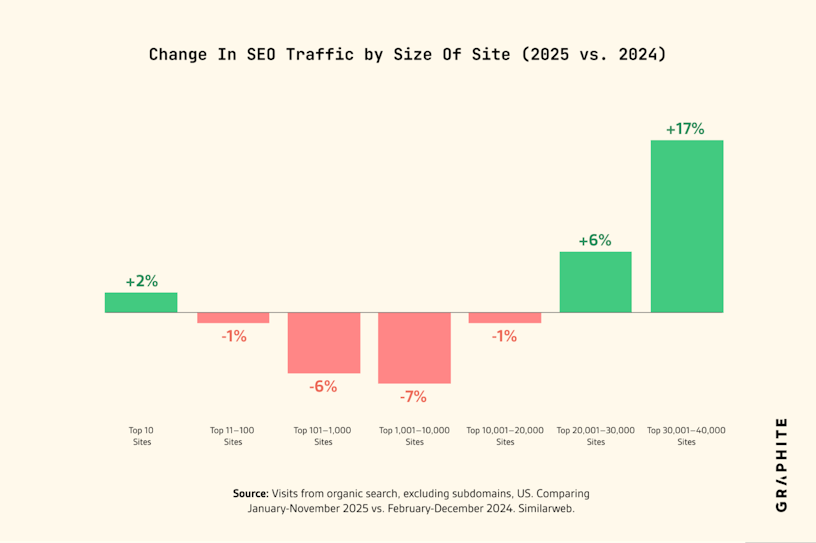
The newly large-scale analysis by Graphite in partnership with Similarweb challenges the narrative that SEO traffic has collapsed due to AI advancements or changes in search behaviour. The study examined organic search traffic to over 40,000 major U.S. websites and found that SEO traffic has declined modestly, by about 2.5% year over year rather than dramatically.
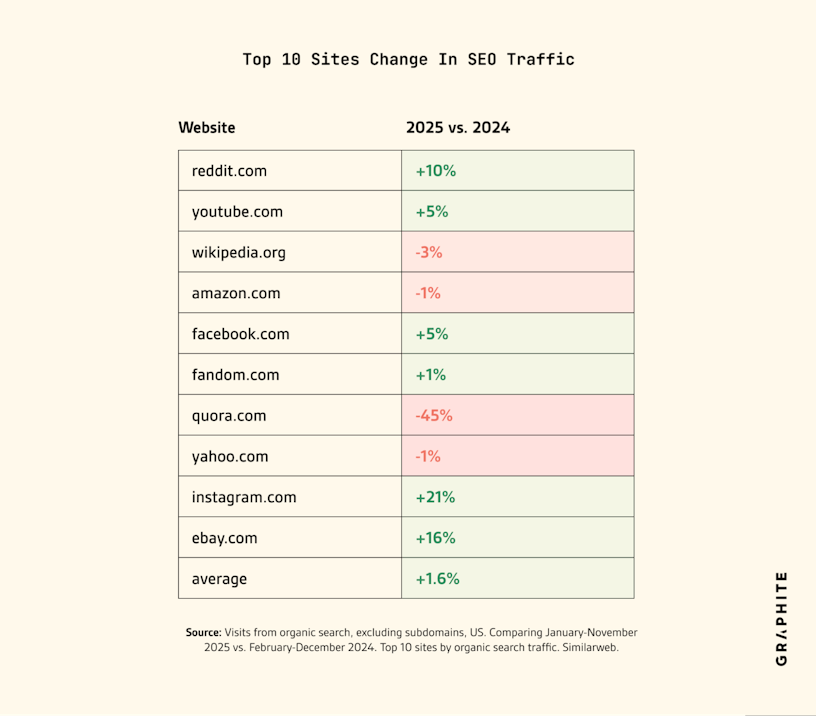
Contrary to sensational claims (e.g., -25 % or more), the data shows that organic search has remained relatively stable amid the rise of AI Overviews, with overall search engine traffic even increasing slightly (+0.4 %) and Google traffic rising about +0.8 %. Large sites (top 10) saw traffic increase by around 1.6%, while mid-range sites (ranked ~100–10,000) experienced the largest declines. This is a nuance often lost in broad narratives.
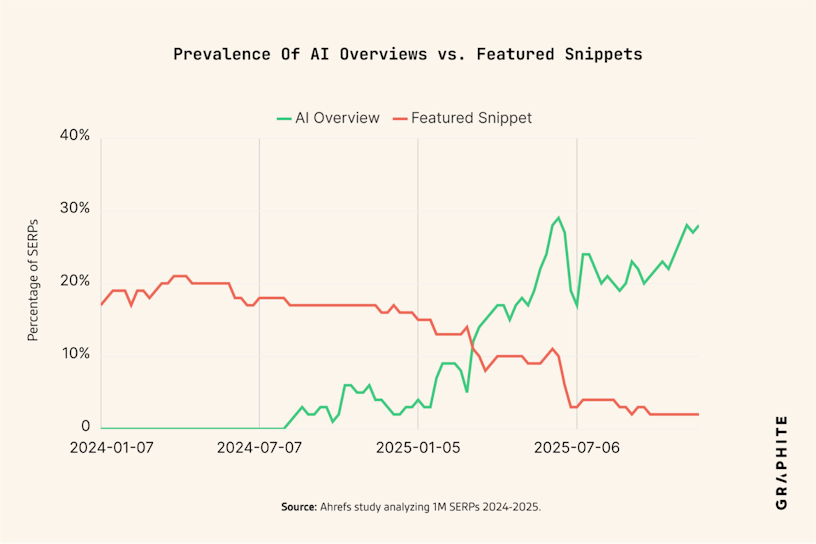
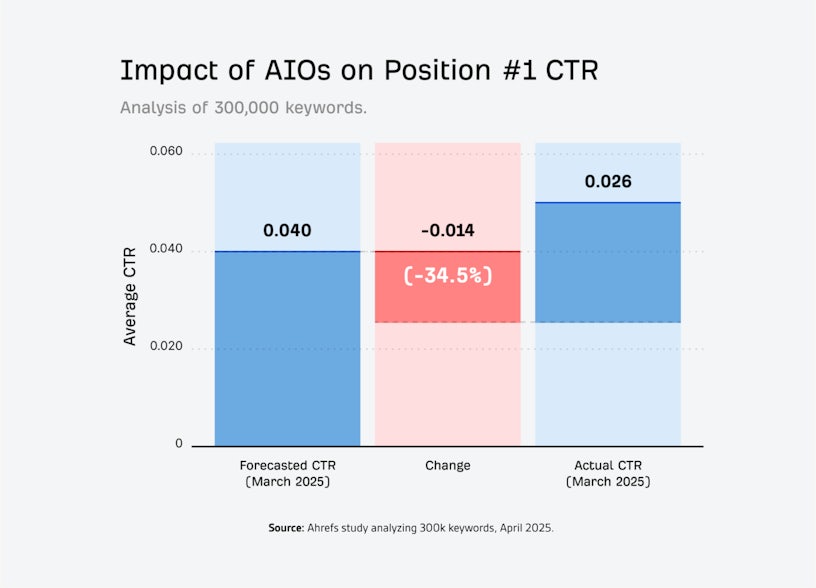
The prevalence of AI Overviews that appear in roughly 30% of SERPs does reduce click-through rates when they’re shown (by about ~35 %), but they don’t dominate search experiences enough to cause massive traffic losses. Moreover, featured snippets and other SERP features long pre-dated AI Overviews and similarly reduced CTRs on some queries.
The article also critiques common research methods that fuel exaggerated claims, such as small samples or self-reported surveys, which don’t accurately reflect real traffic trends. Instead, objective visit data paints a more stable picture: while organic SEO is evolving, it’s not plunging.
The study also gives some interesting new insights about AIO. It shows that AI Overviews decreases CTR considerably (-35%), but it only appears 30% of the time. Plus, as AI Overviews appear more frequently, the percentage of Featured Snippets decreased.
Overall, the analysis concludes that SEO remains alive and significant, though user behaviour, SERP features, and interface changes (including AI) are reshaping how traffic is distributed and monetised rather than erasing the channel altogether.
Microsoft Advertising’s guide From Discovery to Influence: A Guide to AEO and GEO outlines a strategic framework for brands aiming to succeed in the emerging world of AI-driven discovery and commerce. It emphasises that traditional SEO, focused on driving clicks from search engines, must now be supplemented with two new disciplines: Answer Engine Optimisation (AEO) and Generative Engine Optimisation (GEO).
The guide highlights the shift from discovery (being found in search) to influence (being chosen by AI systems). To optimise for generative AI search, brands must ensure their data is complete, current, and contextual, including structured product information, live pricing, availability, detailed specs, reviews, and other trust signals that AI uses when making recommendations.
It also outlines three actions to enhance your shopping merchant discoverability:
- Crawled data: foundation of brand reputation and category knowledge from indexed pages.
- Product feeds and APIs: structured, real-time information such as prices and stock levels.
- Live website data: dynamic details like promotions, delivery, and user reviews.
By mastering both AEO and GEO, brands can appear not only in search results but also in AI recommendations, agent interactions, and AI browsers. This is increasingly crucial as more users ask questions or make buying decisions through AI interfaces rather than traditional search links.
Google has introduced AI-powered features on Google Trends’ Explore page that let users delve deeper into search trend data through natural-language queries and AI insights. Using the Google-developed Gemini model, Trends users can now explore a subject on Trends and compare related search data.
For example, when you search for ‘most popular cat breeds’, here is the result:
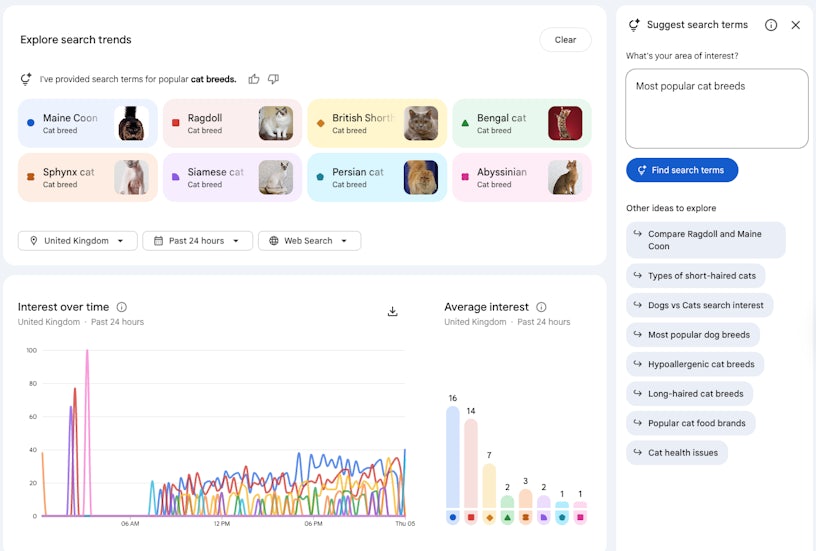
Google Trends then shows you search trends related to your search interest, along with interest over time for each trend.
The update also includes improved navigation and exploration tools. Users can switch between traditional chart views and the AI conversational interface, making Trends useful both for data analysts and casual users.
Keep an eye on our blog for the latest Google Algorithm updates, or get in touch if you want to discuss your digital solutions, such as SEO, for 2026 and beyond.