
This month, we bring you some exciting developments and updates from the world of search.
The search landscape continues to shift toward a more AI-driven, guided, and personalised experience. Google is testing deeper AI integration, from headline rewrites that reshape how content appears to guided research journeys that reduce the need to explore results manually. At the same time, it is exploring giving publishers more control over AI usage, including potential opt-outs from generative features.
Meanwhile, platforms like ChatGPT are advancing context-aware search with location-based responses, competing directly in local discovery. These updates signal a major transition of search evolving from simple information retrieval into an AI-mediated, interactive, and increasingly personalised experience.
In addition, as users increasingly discover content across platforms like TikTok, YouTube, and AI tools, influencer content must be structured to be visible across multiple ecosystems. The shift reflects a broader change in search behaviour, where discovery happens across social, video, and AI platforms. Brands should align influencer strategies with SEO principles to maximise reach and visibility across all digital touchpoints.
We’ll explore these updates and more in detail in the article below.
Allow our traffic light system to guide you to the articles that need your attention, so watch out for Red light updates as they’re major changes that will need you to take action, whereas amber updates may make you think and are definitely worth knowing, but aren’t urgent. And finally, green light updates, which are great for your SEO and site knowledge, but are less significant than others
Keen to know more about any of these changes and what they mean for your SEO? Get in touch or visit our SEO agency page to find out how we can help.
In this post, we’ll explore:
- Google is "developing" an opt-out for Generative AI features in search
- Google confirms 'AI headline rewrite' test in search results
- Google tests "Skip digging, start guided research" to drive users to web guide-like results
- ChatGPT enables location sharing for more precise local responses
- Google Gemini may adapt AI answers to match user tone: Report
- Google tests reply to reviews with AI
- How to optimise influencer content for search everywhere


Google is developing new controls that would allow website owners to opt out of having their content used in generative AI search features, including AI Overviews and AI Mode. This development was revealed in response to proposals from the UK’s Competition and Markets Authority (CMA), which is introducing new digital market rules focused on fairness, transparency, and competition.
The CMA has proposed that publishers should have greater control over how their content is used in AI systems, including the ability to prevent their content from being used for AI summaries or model training. Google acknowledged these concerns and stated it is exploring ways to expand its existing controls, such as robots.txt and Google-Extended, to specifically address generative AI usage.
However, Google also emphasised that any opt-out solution must avoid breaking the core functionality of Search. The company warned that overly restrictive controls could lead to a fragmented or confusing user experience.
This potential change reflects increasing tension between publishers and search platforms. Many content creators argue that AI Overviews and similar features use their content without driving sufficient traffic back to their sites. Giving publishers an opt-out could address these concerns, but it also raises questions about trade-offs, such as losing visibility into AI-driven results if they opt out.
Overall, the move signals a shift toward greater publisher control in the AI search era, driven by regulatory pressure and industry feedback. While still in development, it could reshape how content is used, attributed, and monetised in AI-powered search environments.
Google is experimenting with using AI to rewrite headlines in Search results, replacing publishers’ original titles with AI-generated alternatives. The company confirmed that this is a small, limited test designed to improve how headlines match user queries and increase engagement.
In observed examples, Google shortened or simplified titles and sometimes altered tone or intent. For instance, longer or more nuanced headlines were shortened to more direct ones.
This experiment builds on Google’s long-standing practice of modifying titles but represents a significant shift toward AI-mediated content presentation. Historically, title rewrites relied on existing page elements like headings or anchor text. Now, AI may generate new wording that the publisher never wrote.
Google said it uses these sources to “automatically determine title links”
- Content in <title> elements
- Main visual title shown on the page
- Heading elements, such as <h1> elements
- Content in og:title meta tags
- Other content that’s large and prominent through the use of style treatments
- Other text contained in the page
- Anchor text on the page
- Text within links that point to the page
- WebSite structured data
The move has sparked concerns among publishers and SEOs. Rewritten headlines could misrepresent content, remove nuance, or change editorial intent. It also raises questions about ownership and control, as publishers may no longer fully control how their content appears in search results.
At the same time, Google argues the goal is to improve relevance and user experience by aligning titles more closely with search queries. This reflects a broader trend where search engines increasingly mediate how content is presented, rather than simply displaying it.
Google is experimenting with a new search experience described as “Skip digging, start guided research,” which aims to simplify how users explore complex topics. Instead of requiring users to perform multiple searches and manually refine queries, the feature provides a more structured and guided approach to information discovery.


The experience presents users with suggested subtopics, follow-up questions, and pathways that help them explore a subject step by step. Rather than clicking through multiple pages and piecing together information, users can navigate a curated flow of related ideas directly within the search interface.
This approach reflects a broader shift in Google’s strategy toward AI-assisted exploration. For users, this could make research faster and more intuitive, particularly for complex or unfamiliar topics. For publishers and SEOs, it raises questions about visibility, as users may rely more on guided flows rather than clicking through traditional search results.
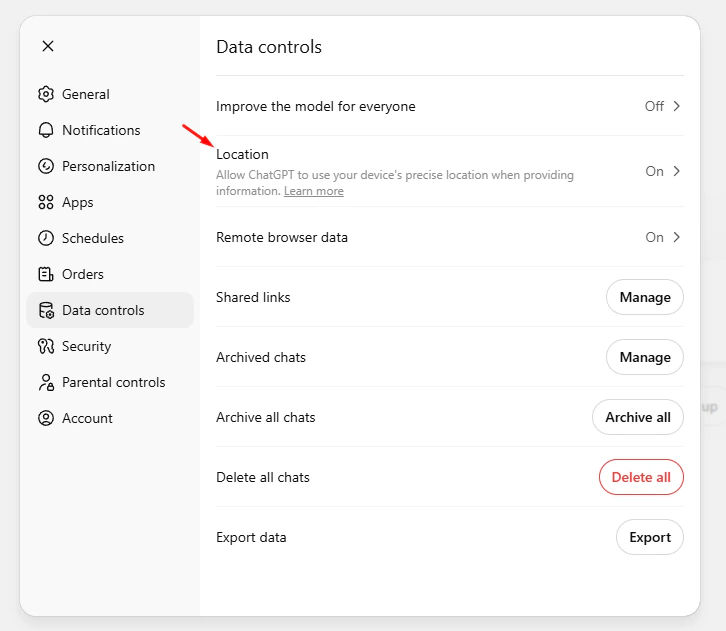
ChatGPT has introduced a new feature that lets users share their location to get more precise, relevant local responses. By accessing approximate location data (with user permission), ChatGPT can tailor answers to queries involving nearby businesses, services, and activities, such as restaurants, shops, or travel recommendations.
This update significantly improves the usefulness of AI for local search scenarios, where context like geography is critical. Previously, users had to manually specify their location in queries. With location sharing enabled, ChatGPT can automatically personalise responses, making interactions faster and more accurate.
The feature is optional and designed with user control in mind. Users can choose whether to share their location and can disable the feature at any time. This aligns with broader expectations around privacy and transparency in AI systems.
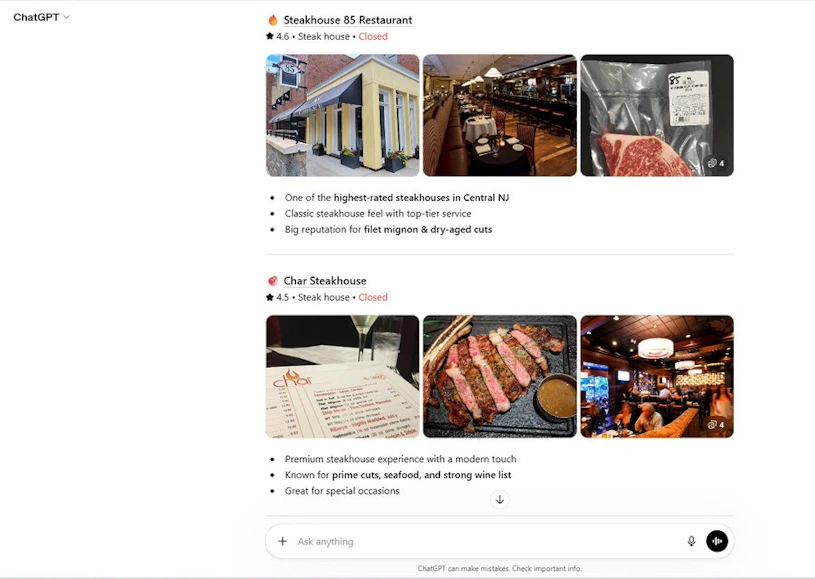
From a competitive standpoint, this move positions ChatGPT more directly against traditional local search platforms like Google Search and Google Maps. By combining conversational AI with real-time contextual data, ChatGPT is evolving from a general assistant into a context-aware discovery tool.
For businesses and marketers, this development signals a shift in how local visibility may work in the future. Instead of relying solely on rankings in search results, businesses may need to ensure they are discoverable within AI-driven recommendation systems.
An unverified report suggests that Google’s Gemini AI is guided by internal system instructions designed to mirror user tone, intent, and emotional context while still grounding responses in factual information. According to the report, Gemini is instructed to match the user’s energy, validate their emotions, and align answers with their perspective before delivering information.
This creates a potential tension: while the model is meant to provide accurate, reality-based responses, the “supportive collaborator” approach may override neutrality, leading the AI to reinforce the user’s framing. For example, negatively framed queries may elicit more negative answers, whereas positive queries may amplify favourable viewpoints. Rather than balancing perspectives, as traditional search results do, AI responses may reflect and reinforce existing sentiment.
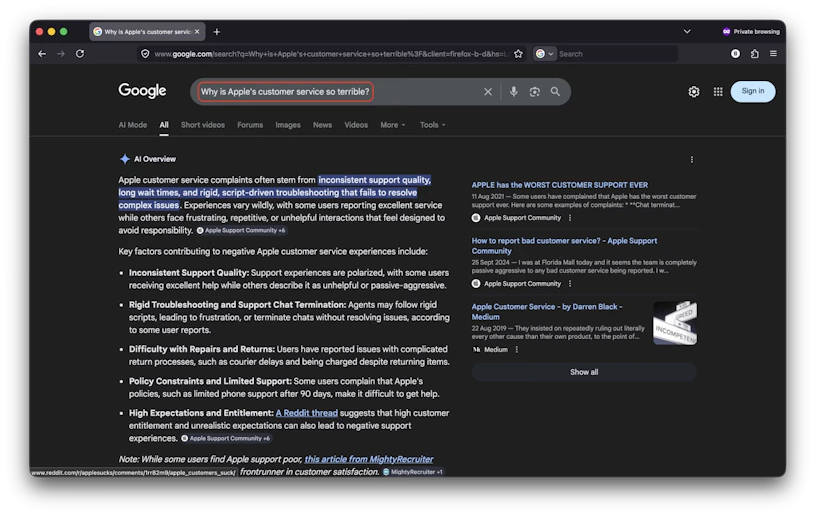
The report also claims that query framing influences which sources are cited, how summaries are written, and the overall tone of responses. This aligns with observed behaviour in AI Overviews, where tone often shifts based on user intent.
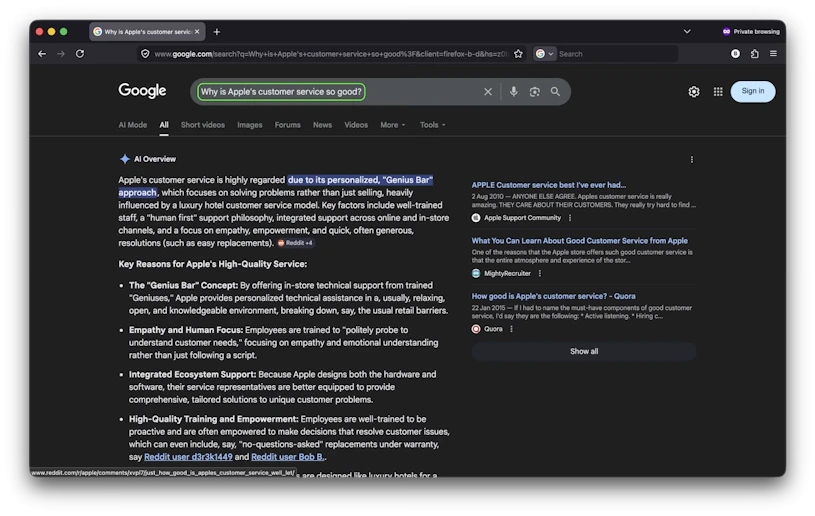
Although Google has not confirmed the leak, the findings highlight a broader implication: AI search may be shaped as much by user emotion as by objective information, making perception and sentiment increasingly important in visibility and reputation.
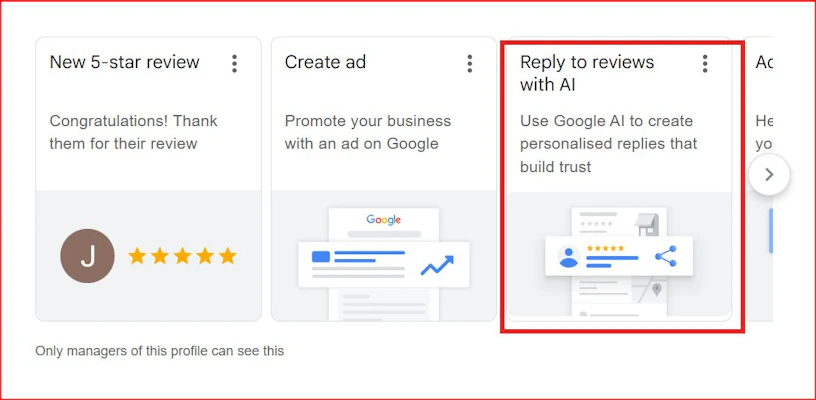
Google is testing an AI feature that automatically generates replies to customer reviews on Google Business Profiles. The tool suggests responses based on the review content, allowing businesses to quickly respond without writing replies manually.
This feature is believed to save time and encourage more consistent engagement with customer feedback. It also reflects Google’s broader push to integrate AI into local business tools, helping businesses manage reputation and communication more efficiently while maintaining responsiveness in customer interactions.
How to optimise influencer content for search everywhere

The article from Search Engine Land explores how brands should optimise influencer content for a “search everywhere” environment, where discovery happens across multiple platforms, including traditional search engines, social media, video platforms, and AI-powered tools.
As user behaviour evolves, people are increasingly using platforms like TikTok, YouTube, Instagram, and AI assistants to search for information, products, and recommendations. This means influencer content is no longer confined to social engagement alone, but it also plays a role in search visibility.
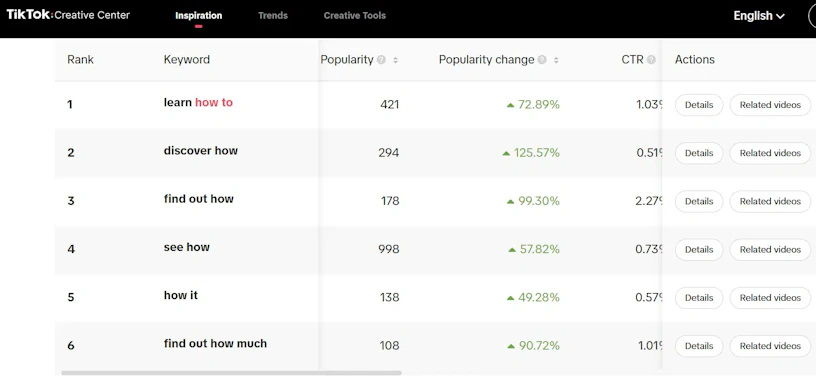
The article emphasises that influencer content should be treated as part of a broader content ecosystem. Brands need to align influencer strategies with their overall SEO and content strategies, ensuring consistency in messaging, keywords, and topics. This helps reinforce visibility across different platforms and improves the likelihood of content being discovered in multiple contexts.

Another key point is the importance of multi-format optimisation. Content should be adapted for different platforms, considering how each platform surfaces and ranks content. For example, video content may require transcripts and captions, while social posts benefit from clear, keyword-rich descriptions.
Keep an eye on our blog for the latest Google Algorithm updates, or get in touch if you want to discuss your digital solutions, such as SEO, for 2026 and beyond.