Now is the marketer’s call to action! It’s been found by multiple companies, such as Nielsen, Kantar and Google, that advertising effectiveness can depend on the creative by up to 70%!
This, combined with the 4,000 ads we see every day on average, your ad needs to be one of the rare 16% that gets remembered.
So, how can you ensure your creative stands out and drives results?
It’s easy to get caught up in the numbers, the media mix, and budget allocation. But we’ll be exploring why giving your creative the attention it deserves isn’t just an option, it’s absolutely crucial for success.
Why Creative Matters More Than Ever
The biggest crime a creative can commit is to be boring. The market is already saturated, and simply throwing an advertisement out there isn’t enough.
Imagine a line-up of similar products, like headphones. It’s the brand’s unique creative; the colours, the fonts, the photography that signal who they are and what they stand for. Creative is the signpost that helps customers navigate their choices and understand your unique selling proposition (USP). It’s the core of your brand’s personality, and it’s what builds that all-important emotional connection with your audience. Without that, you risk being just another face in the crowd or, even worse, being mistaken for a competitor.
We could list off a few buzzwords which are seen in countless blogs: ‘it must make an impression’, ‘break through the noise’. Whilst the theory makes sense, yes, your brand must be instantly recognisable, strong and differentiated, they don’t exactly tell you the answers you need to hear to achieve that.
The superpower of experimentation
Nothing upsets stakeholders more than risk. This leads to many brands being risk-averse. Sticking to what you know and relying on opinions over data-driven insights can cause some serious problems for performance.
Creative is subjective, and feedback loops with a lot of stakeholders can slow things down and lead to less effective assets.
This is where experimentation comes in. It’s the creative superpower!
By using data to guide your decisions, you can quickly determine what works and what doesn’t. Instead of debating whether a certain colour is better, you can confidently say, “The data shows that a light background performs best with our audience.” This approach takes the subjectivity out of the equation, leading to better-performing assets and faster turnaround times.
However, being too cautious also risks boring your customers (the death of anything creative!) To truly win, you need to experiment with different concepts, messages, story arcs, and formats (like UGC, carousels, or statics). The more you put out there and the more you test, the more valuable insights you could gain about what genuinely resonates with your audience.
Creative Fatigue
You’ve most likely seen an ad before that once you see it again, again, and again, you begin to associate a negative stigma to it. So keep in mind that an ad can start to lose its effectiveness in as little as a few days.
This is known as creative fatigue, and is another reason why keeping your content fresh and engaging is so important. This doesn’t always mean creating a whole new campaign; sometimes, a simple change to the hook or the opening frame is all it takes to revitalise an asset. Regularly monitoring your creatives helps you spot signs of fatigue early and maintain strong performance across your campaigns.
The ‘Go, then grow’ method
Consistency is key for brand recognition, but it shouldn’t stop you from exploring new ideas. The go, then grow method is a smart way to balance these two priorities.
Start by testing a new concept on a small scale. If it performs well, you can then “grow” it by putting more budget behind it or expanding it to other channels. If it flops, you can stop it before it gets too big.
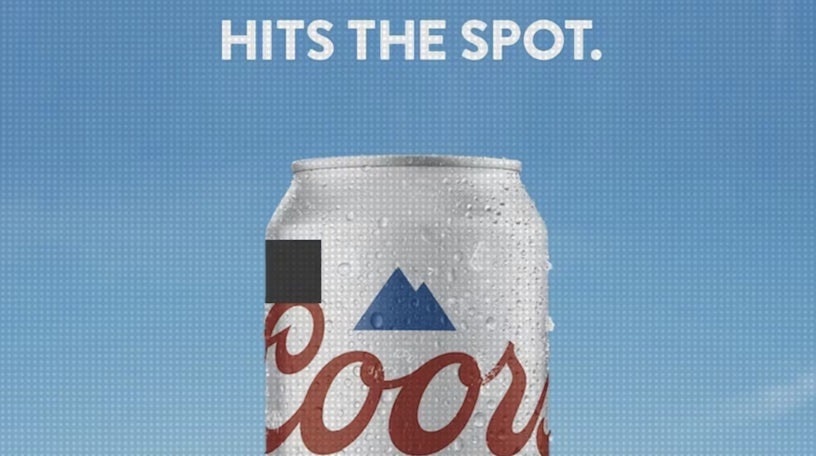
This approach minimises risk while still allowing you to innovate. A great example is Coors Light, which created a social ad based on a viral moment, and because it performed so well, they were able to expand it into limited-edition cans and further advertising.
Creative across the funnel
It’s tempting to pour most of your budget into bottom-of-the-funnel conversion ads because the ROI is easy to track. However, this is a short-sighted strategy. You can’t convert customers who don’t know who you are.

Creative should be working hard at every stage of the funnel:
- Awareness: Tell a bigger story. Focus on who you are, what you offer, and why a customer should identify with you.
- Consideration: Address why you’re better than the competition. Highlight benefits, build trust, and prove your value.
- Conversion: Remove all friction to make the buying process as easy as possible.
Putting budget into the top and middle of the funnel is a long-term investment. While the results might not be immediate, you’ll ultimately build greater brand awareness and customer loyalty, making future conversions easier and more efficient.
The Winning Combination
The most impactful performance happens when three elements work together seamlessly:
- A Clear Brand with a Strong Product Position: You know your value proposition and your direction.
- A Cohesive Campaign: Your top-level messaging and creative vision are clear.
- Performance Marketing: You are constantly exploring, testing, and learning from your data.
When these three components align, you create a powerful, unforgettable experience that truly connects with customers and drives exceptional results.